The post Meeting AmericanHort’s Ken Fisher appeared first on AmeriNursery.com.
]]>Meeting Ken Fisher
They say that patience is a virtue, but can the same be said of impatience?
It most certainly can, if it drives you to challenge yourself to learn as much as you can, as well as you can, as quickly as you can.
Ken Fisher, the new president and CEO of AmericanHort, intends to do just that in the upcoming few months. Fisher took the helm of the national association in June, a scant month before the opening of this year’s Cultivate trade show in Columbus. It wasn’t necessarily trial by fire; more like meeting the extended family – the large, diverse, extended family.
“Cultivate was fantastic,” Fisher says.
“It’s nice that 10,000 of my closest friends came to Columbus so that I could see what they do,” he jokes, “but now what I want to do is I want to go out and see people on their turf. And I’m going to be on the road a lot in the next 60 days.”
Fisher’s impatience is eagerness, really, to learn what makes this industry tick and to become familiar with the people involved. He brings experience from a number of other areas, much of which he’ll apply to leading the association. But his immediate, self-appointed task is to learn. And then learn more.
“I’m very impatient with progress,” he says. “I’m not impatient with people, but I’m impatient with progress. But at the same time, I know that I have to be a little bit patient with learning the industry and the players. So I kind of have one foot on the accelerator and one foot pumping the brakes a little bit just to make sure … At the same time, I want to be respectful to the industry and the companies out there, and I understand that there’s a learning curve.”
He’ll be visiting, observing and listening, and one thing he’s interested in is finding commonalities, basic business issues and ways of performing that seemingly unrelated industries share. “I look for commonalities in sales and marketing and production and management and organizational development and industry trends,” he explains.
“I’ve been in commodities, I’ve been in consumer goods, I’ve been in industrial equipment, I’ve been in financial services, I’ve been in a lot of different industries,” he continues. “You do start to look at these trends that are consistent: how consumers behave, what’s happening with transportation logistics, what’s happening with labor costs, and what’s going on with regulation? While it’s unique to each industry, you see the same trends affecting each industry in a similar way. Everybody’s got to get their arms around the cost of labor, and everybody has to get their arms around slow growth. Everybody has to get their arms around the rising cost of doing business. All of those things are everywhere, and I think there are best practices that can be applied inside the horticulture industry. It’ll be a unique perspective, but it’ll be a different spin.”
To help the industry get to know Ken Fisher in return, we asked him to put pen to paper, so to speak, and answer a few questions. Here we go:
What drew you to the job, and to the green industry?
Ken Fisher: First, the people and their values. The people I have met so far represent all that is good in our communities. Very refreshing. I am looking forward to meeting even more of our membership this fall as I attend industry events and visit with a broad range of our member companies.
Second, the reach of the plant and horticulture industry. The industry supply chains and markets are sophisticated and diverse, which provides rich opportunities for successful businesses, a thriving professional community and desirable careers for future generations.
Your previous positions have been in the corporate community. What unique skills, experience and perspective do you bring to the position of leading the industry’s premier association?
Ken Fisher: AmericanHort is a unique opportunity to lead a mission- driven organization that will benefit from a business-oriented approach. My business leadership experience should translate well to the needs of this industry leading organization which include:
- Successfully lead businesses to capture growth opportunities
- Manage and develop. operationally and financially efficient organizations.
- Build, develop and lead high achieving management organizations.
I hope to expand American- Hort’s position in leading and unifying the horticulture industry.
What can horticulture professionals learn from professionals in other industries?
Ken Fisher: Good management and leadership practices are transferable across companies, industries and products. I have been involved with “best practices” from successful industrial and consumer companies in production and supply chain that can be adapted to help horticulture companies. Processes and programs developed by leading consumer goods companies can provide great insights into consumer behavior and marketing programs for growing horticulture companies. And staff and professional development skills and practices are essential for any organization that wants to better serve customers, profitably grow their business, and develop high caliber organizations. American- Hort can help our members and the industry in each of these areas.
Can you identify a few of what you perceive to be the biggest challenges in the industry today? Following that, how do you plan to approach these challenges?
Ken Fisher: At a high level, we need to ensure that we are developing successful business people and growing prosperous businesses in current and future economic and market conditions. And we want to help position horticulture to be a relevant and thriving industry where more individuals and companies participate in the professional community and horticulture will be considered desirable careers for future generations.
Our job at AmericanHort is to provide an industry leadership platform, forums for collaboration and best-in-class programs. Some examples include:
Government Advocacy — ensuring no industry-relevant legislation gets passed without the industry’s voice being heard and interests being represented.
Staff and Professional Development — providing industry-leading events and programs that help our member companies train and develop their best and brightest.
Collaboration and Connectivity — there is significant value to the industry in a strong professional community that shares ideas, works together to address industry issues, and guides the industry forward, which American- Hort will help facilitate.
Research — through AmericanHort’s research affiliate, the Horticultural Research Institute, we can fund important research and scholarship programs to inform, direct and potentially transform our industry.
Cultivate — AmericanHort hosts the largest gathering of professionals in our industry, which pulls all of this together every year in July in Columbus. Cultivate ’17 will be bigger and better as the Greater Columbus Convention Center is expanding by 30,000 square feet, which will allow us to offer even more great programming and allow our exhibitors to expand their offerings.
What are your thoughts on attracting and keeping younger horticulture professionals?
Ken Fisher: This is a key initiative for AmericanHort going forward. Some areas we are working towards include:
A strong and shared vision for the future, which includes interesting career and ownership opportunities.
An economic equation that ensures young professionals can make an income competitive with other industries.
A strong NextGeneration community group to network and share ideas.
A strong and supportive group of “experienced” business leaders who will invest personally and financially in these young professionals.
And an interesting, changing, vibrant, growing, relevant, thriving industry — which we all want to help create!
How can industry professionals help you?
Ken Fisher: Everyone I have met has been enthusiastic, supportive and helpful in introducing me to the industry and issues. I am a strong proponent of collaboration and appreciate the “partnership” I am developing with our Board of Directors and other industry leaders I am starting to work with. AmericanHort will continue to be a leading and unifying force in the industry, and I will appreciate input and support from industry professionals as we realign the mission, programs and resources of AmericanHort to better serve the industry.
The post Meeting AmericanHort’s Ken Fisher appeared first on AmeriNursery.com.
]]>The post SHIFTING PERSPECTIVES appeared first on AmeriNursery.com.
]]>
The Greatest Generation. Baby Boomers. Gen X. Gen Y. The Millennials. (Youngest cohort to be determined.)
At any point in time, our population is composed of several generations – living together, working together, moving society forward and fighting like cats and dogs. Looking back through history, however, it’s easy to see that this century is unique: Never before have so many representatives of so many generations coexisted.
As has been the case for centuries, each consecutive generation tends to confound the one that came before. We’re left scratching our heads, wondering what happened and why these kids don’t think and act the way we do. Their point of view – their worldview – is quite different. Their habits don’t mirror ours. Their demands reflect what we perceive to be different values.
Photos courtesy Sally benson unless otherwise noted
But are they really so disparate? Yes. No. Maybe? Take the Millennials, the group of young adults who now compose the largest, most diverse generation in the U.S. Their education and their understanding of the world have been shaped by technology that simply didn’t exist for previous generations. According to research conducted by the President’s Council of Economic Advisors, as well as Pew Research, Gallup polls and far too many studies to list here, members of this generation – in general – tend to value community, family and creativity in their work. Despite the embrace of “family,” however, they tend to marry later than those in previous generations, and they’re putting off home ownership longer than their Gen Y, Gen X and Baby Boomer relatives.
All of this presents a challenge to the green industry, and the rise of the Millennial Generation comes at a time when we’re reevaluating our business protocols following the Great Recession. While it may not represent a seismic shift in the industry, it’s time to shift perspectives and discover the best ways to reach a changing client and customer base.
But how?
Enter SHIFT, the research initiative launched this year through the joint efforts of AmericanHort and the Horticultural Research Institute. It’s a multiyear project tasked with the goal of determining who this generation is, what they want, and how we need to shift our business mindsets and practices in order to capitalize on the opportunities presented by changing consumer demographics and behaviors. It’s a tall order, but it’s a necessary step. This is a huge population of consumers whose shopping and lifestyle habits are very different from what we’re used to addressing.
The research process
Field research began in 2014 and enlisted students in the MindMarket program at the Columbus College of Art and Design. Beginning with the question, “What if … ?” researchers dug deep into the industry’s current business models, utilizing a process called “design thinking,” which employs typical design practices and merges them with business strategies – which is to say, paying close attention to the end users on the front end, and designing for them. As one student researcher so aptly put it, “The benefit of our research is that we did qualitative research instead of quantitive. A lot of times, people with a business background and a business way of thinking about things are very hard-core about the numbers. The benefit of approaching it from design thinking and a qualitative standpoint is that it opens you up to being able to get in there and experience what the customers experience.”

Photo: iStock | Alberto Bogo
Researchers spanned the country to partake in the garden center experience in all regions, determining what worked and what didn’t. Sort of like a secret shopper? Maybe. Once they gathered ideas, they developed “design maps,” which basically serve as suggestions and recommendations to retailers about how to improve the experience – from the young shopper’s point of view. What’s confusing? What’s daunting? What’s boring?
What works? It’s a fresh new perspective that connects the retailer with the purchaser – and from there, the rest of the industry benefits from these insights. The program began with a concentration on retail, but it was soon realized that each segment can and should be addressed.
In a nutshell, “design thinking” is solution-focused exploration. Rather than begin with a negative, a problem – say, “we’re slow to recover from a recession and we’re concerned about where we go from here” – it begins with the ultimate goal in mind: How do we attract new customers? How do we express the value of plants in the new customers’ language?
Early results
Much of this initial work – remember, this project will span several years – was revealed at Cultivate’15 in Columbus in July, where graphic presentations were offered to help industry professionals become attuned to the rising tide of new consumers. For example, researchers suggested that language, including industry specific lingo, often can be intimidating. To many, “gardening” means work. And newer consumers are drawn to ultimate value rather than what goes on behind the scenes, so rather than discussing “weeding,” they respond to the results. It’s “spring cleaning,” it’s a “facelift,” it’s anger management therapy. (Haven’t we all been there?)
Photo: iStock | michaeljung
Visitors were encouraged to offer alternatives to the title, “gardener,” and among the typical suggestions of plant geek, plant nerd and landscape designer were “outdoor living specialist,” “eco-tarian” and “horticultural astronaut.”
The research continues, with the goal being to provide industry professionals new ways to shift their thinking and, ultimately, to adapt new business models to become more successful in reaching the newer generations who expect something different from the status quo.
They say you can’t teach an old dog new tricks, but you can certainly learn to adapt your business when the research shows what works.
More information can be found at the AmericanHort site, http://www.americanhort.org, with updates promised as the project continues.
Cover Photo: iStock | michaeljung
The post SHIFTING PERSPECTIVES appeared first on AmeriNursery.com.
]]>The post GROW WISE, BEE SMART WEBSITE LAUNCHES appeared first on AmeriNursery.com.
]]>
The Horticultural Research Institute, the research affiliate of AmericanHort, announced the launch of the Grow Wise, Bee Smart website. This resource is a key component of the Horticultural Industry’s Bee and Pollinator Stewardship Initiative, which was created to provide leadership and guidance to the industry on pollinator health. The site serves as the communications hub for the latest research and developments related to the role horticulture plays in supporting pollinator health.
Grow Wise, Bee Smart currently features information on the importance of bees and pollinators, threats to their health, and steps everyone can take to improve habitat and forage. Links to the Million Pollinator Garden Challenge and Pollinator Partnership further guide retail and landscape firms and their customers on how to plant and register new gardens and habitats for pollinators.
As the Grow Wise, Bee Smart stewardship program for plant production is launched, and as funded and directed research yields results and guidance, the site will feature timely new information and insights.
The Horticultural Industry’s Bee and Pollinator Stewardship Initiative has three goals:
- fund and guide research to answer urgent questions regarding impact of pest management practices and bee and pollinator attractiveness of major plants we grow and sell;
- develop a plant production stewardship program based on best practices; and,
- partner with other interested groups to improve and expand pollinator habitat and forage.
Great progress is being made on all fronts. The Horticultural Research Institute has directly funded five related research projects totaling $160,100. AmericanHort and HRI helped to secure another $272,000 for a priority project that received special Farm Bill funding. A grower and scientist task force has developed key components for the stewardship program. And, AmericanHort was one of eight founding partners of the National Pollinator Garden Network, which in early June launched the Million Pollinator Garden Challenge.
“Horticulture, the health of pollinators, and the success of our industry are intertwined,” said Harvey Cotten, past president of the Horticultural Research Institute and a leader in the Bee and Pollinator Stewardship Initiative. “We are the original green industry, and our plants and expertise can make a difference for bees, butterflies, and other pollinators,” he added.
The post GROW WISE, BEE SMART WEBSITE LAUNCHES appeared first on AmeriNursery.com.
]]>The post INDUSTRY SUPPORT FOR NATIONAL POLLINATOR HEALTH STRATEGY appeared first on AmeriNursery.com.
]]>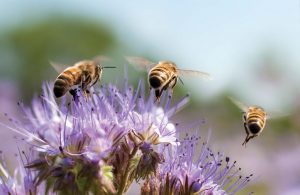
Everyone’s buzzing about it.
The Task Force that was formed in 2014 to study the plight of pollinators has just released the results of its work. (To recap: Just about a year ago, President Obama issued a Presidential Memorandum that created an interagency task force with the assignment to develop an all-encompassing strategy, designated to get to the bottom of colony collapse and to develop plans to remediate the dramatic decline of pollinators – most notably, honey bees.)
The resulting “National Strategy to Promote the Health of Honey Bees and Other Pollinators” (which can be found at http://bit.ly/whitehouse_pollinatorhealth) proposes three basic goals, including:
- the reduction of honey bee colony losses during winter (overwintering mortality) to no more than 15 percent within 10 years;
- increase the Eastern population of the monarch butterfly to 225 million butterflies on specific acreage in Mexico; and
- restore or enchance 7 million acres of land for pollinators over the next five years.
That’s just the tip of the 64-page iceberg, but if you work with plants, it’s a document well worth reading. The “Strategy” is accompanied by something called the “Pollinator Research Action Plan,” also a must read.
In response to the release of the government’s strategy, horticulture organizations AmericanHort, the Society of American Florists, American Floral Endowment and the Horticultural Research Institute issued a combined statement, which is provided here. (You’ll recall that Joe Bischoff, AmericanHort’s former Regulatory and Legislative Affairs Director, wrote about pollinator health in the October 2014 issue of American Nurseryman: http://www.amerinursery.com/growing/pollinators-pesticides-and-public-perception/).
Statement on National Pollinator Health Strategy
We join together to welcome and embrace key aspects of the federal government’s recently announced National Strategy for the Protection of Honey Bees and Other Pollinators. The long-awaited strategy has three major goals: reducing honey bee colony losses, increasing Monarch butterfly populations, and restoring or enhancing millions of acres of land as pollinator habitat, through public and private action. As is the list of threats to bee and pollinator health, the national strategy itself is long and complex. We are studying the details, but the overall approach appears balanced and mostly sensible.
The national strategy’s overarching goals dovetail well with the focus of the ongoing Horticultural Industry Bee and Pollinator Stewardship Program. Under that initiative, we have directly funded several priority research projects, and collaborated on additional research funded by others, to provide critical scientifically sound guidance for professional horticulturists. We are developing a grower stewardship program based on best practices for protecting pollinators while managing pests. Finally, we are establishing partnerships with other agricultural, conservation, restoration, beekeeper and honey producer groups to advance the goals of improved pollinator habitat and forage.
Improved habitat and forage are properly at the heart of the national strategy. Many components of the strategy target large-scale habitat restoration and federal lands. Horticulture has a major role to play, as well. This is especially true in the context of the managed residential, commercial, and municipal landscapes of urbanized and urbanizing areas of the nation. In these areas, the best way to support honey bees and other pollinators is to plant healthy and site-appropriate pollinator-friendly plants. Professional growers of tree, plants, and flowers provide the very thing pollinators need to thrive: diverse and ample sources of forage.
With respect to activities of the Department of Interior and USDA’s Natural Resources Conservation Service, as demand increases for pollinator-friendly seeds and plants we strongly urge close collaboration with the private sector to meet growing demand. Expanded government competition with the private sector is not the answer. Finally, the Strategy itself (not including the appendices) uses the term “native” in the context of plants and vegetation more than 60 times. In many planting situations, like large-scale restorations, native plants may be the logical choice. In others, like managed landscapes or remediations, all site-appropriate, non-invasive pollinator-friendly plants should be embraced.
The strategy calls for major commitments to research. We recognize that public-private partnerships will be needed to address the myriad questions that must be addressed through ongoing research. Toward this end, we recently supported the President’s proposed budget for expanded research conducted or funded by USDA agencies including the Agricultural Research Service and National Institute for Food and Agriculture.
Finally, with respect to the Environmental Protection Agency’s pollinator protection plan, we are pleased to acknowledge the clearly stated commitment to following the science. Emotional campaigns based on anecdotes and a few flawed studies are not a solid foundation for public policy. We also acknowledge and appreciate the stated commitment to ongoing collaboration with groups such as the Horticultural Research Institute and Minor Crop Farmer Alliance. We share that commitment going forward.
We and our members stand ready to work collaboratively to advance the goals of the National Strategy.
For additional information on what horticulture needs to know about pollinator health, view our video at http://bit.ly/ProtectingPollinatorsVideo.
The post INDUSTRY SUPPORT FOR NATIONAL POLLINATOR HEALTH STRATEGY appeared first on AmeriNursery.com.
]]>The post SAF URGES KEY LAWMAKERS TO SUPPORT POLLINATOR HEALTH RESEARCH FUNDING appeared first on AmeriNursery.com.
]]>The Society of American Florists (SAF) joined with dozens of groups from agriculture and beyond in April to call on Congress to increase funding for important research on pollinator health.
The letter, addressed to Reps. Robert Aderholt (R-Ala.) and Sam Farr (D-Calif.) and Sens. Jerry Moran (R-Kan.) and Jeff Merkley (D-Ore.), asks lawmakers to support increases in President Obama’s fiscal year 2016 budget, including a $7 million increase to the USDA’s Agricultural Research Service budget for the Pollinator Health Initiative and $500,000 increase for the National Agricultural Statistics Service to further analyze honey bee colony losses and pollination costs for the Pollinator Health Initiative.
“For over a decade, beekeepers have been suffering from higher than typical overwintering losses,” according to the letter. “These losses and the unpredictability of their severity have threatened the sustainability of this important segment of agriculture. That is why all sectors of agriculture, including row crop, specialty crop, beekeepers, and related agricultural industries have come together to express support for the allocation of these funds and exhibit our shared interest in pursuing this research so that we may all base our decisions on sound science.”
The groups signing the letter also expressed their support for the National Institute of Food and Agriculture and its role in coordinating efforts for long-term protection of pollinator health.
The letter comes at a time when pollinator health is in the headlines — and “misunderstandings about the highly complex issue, and the role that neonicotinoids, or ‘neonics,’ a class of pesticides, play in pollinator health, are many,” said Lin Schmale, SAF’s senior director of government relations. “This is an issue for which sound science must take priority.”
The letter falls on the heels of the Bee and Pollinator Stewardship Initiative’s launch of the website growwise.org. Supported by SAF, AmericanHort and the industry’s research arms, the Horticultural Research Institute (HRI) and the American Floral Endowment (AFE), the Initiative’s website provides a go-to resource for information about bee and pollinator health — whether bee colonies are really still declining and the positive impact the industry can play in promoting bee health. It also cites bee research being conducted by HRI and AFE. Go to the website to download a brochure and “frequently asked questions,” designed for growers, landscapers, and their customers.
The post SAF URGES KEY LAWMAKERS TO SUPPORT POLLINATOR HEALTH RESEARCH FUNDING appeared first on AmeriNursery.com.
]]>