The post Is Immigration Reform Possible? appeared first on AmeriNursery.com.
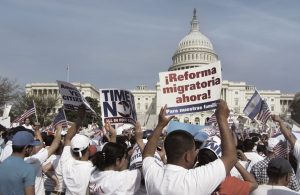
]]>
“It’s going to get worse before it gets better.”
With respect to the horticulture industry and our tenuous labor situation, this simple and time-worn phrase captures the essence of the challenges that lie ahead.
The available statistics, commissioned by the federal government and derived from ongoing surveys, confirm the facts suggested by the more informal narrative of our industry’s growers, landscape professionals and others. The production labor force is aging. It is more settled, more rooted. A large percentage of the workforce (at least half, in the case of agriculture, nursery and greenhouse) is believed to be unlawfully present and unauthorized to work in the U.S. And, this workforce is vulnerable to attrition – aging out, leaving to work in construction, displaced by immigration enforcement.
As production labor challenges grow, more employers have turned to the limited seasonal visa programs now available to them. Use of H-2A, the agricultural program, has literally doubled since 2011, with roughly 166,000 jobs certified by the Labor Department to be filled by a foreign worker in 2016. Of course, that’s still less than 10 percent of agricultural labor need, but the number is growing and the bandwidth of the program is strained.
The H-2B program has been capped by Congress at a laughably low level, and the cap is being hit rapidly this year. Landscape businesses are the single largest user of the program, and our industry may find itself 10,000 workers short – perhaps twice that number – during peak production season. Congress has been on the sidelines, waiting for a signal from the White House.
That signal hasn’t come.
How to make sense of all this? Well, in a sense, there are two President Trumps. One is the successful businessman with a global enterprise. Here at home, he is an H-2 program user – the ag program at a vineyard he owns in Virginia, and the B program at his Mar-A-Lago resort compound. Plus, he’s a builder, a hotelier. Surely he understands this issue from an employer’s perspective!
The other President Trump has surrounded himself and given voice to a cast of nativists and immigration restrictionists who have steadfastly opposed virtually any and all efforts to resolve our nation’s immigration dilemmas from the political middle, where compromise, common ground and solutions are to be found. These individuals have a long history of opposing illegal immigration (which truthfully none of us is “for”); they have also opposed legal immigration, and the temporary, non-immigrant programs that are a lifeline for many in our industry.
Facts and figures
Immigration reform now may seem like a dream, having been No. 1 on the wish lists of several industries for, well, decades. Legislation has been proffered again and again, each time either being shot down in committee or never even making it that far. And each time, it seems the “facts” and figures are malleable, depending on who’s debating and who’s for or against.
So we turned to Pew Research Center, a nonpartisan “think tank” (of sorts) that conducts public opinion polling and performs demographic and social science research. It’s considered to be among the least biased of information sources, offering data rather than opinion, and concentrating on reporting measurable statistics.
In a March report titled “What we know about illegal immigration from Mexico,” Pew states that among unauthorized immigrants in the U.S., there was a decline in the number of those coming from Mexico, but an increase in immigrants from other countries since 2009. The report makes the following points:
The number of Mexican immigrants living in the U.S. illegally has declined by more than 1 million since 2007. Despite the overall decrease, Mexicans still comprise about half of the country’s 11.1 million unauthorized immigrants (52 percent in 2014).
There were more non-Mexicans than Mexicans apprehended at U.S. borders in fiscal year 2016, for the second time on record. In 2016, 192,969 Mexicans were apprehended at the border, reflecting a dramatic decrease from the peak of 1.6 million apprehensions in 2000.
Mexicans were deported 242,456 times in 2015, an increase from 169,031 in 2005. That number is, however, lower than a high of 309,807 deportations in 2013.
Mexican unauthorized immigrants are more likely to be long-term residents here. Figures for 2014 show that 78 percent had lived in the U.S. for 10 years or more; only 7 percent had lived here for less than five years. It’s reported that 52 percent of unauthorized immigrants from other countries had lived here for at least 10 years, and 22 percent had been here for less than five years.
Unauthorized immigrants from Mexico comprise at least 75 percent of the total unauthorized immigrant population in three states: New Mexico (91 percent), Idaho (87 percent) and Arizona (81 percent). California hosts more than 1.6 million unauthorized Mexican immigrants — the highest total of any state — making up 71 percent of the state’s total unauthorized immigrant population.
These individuals, steps from the President, were the architects of a series of Executive Orders now shaping the new administration’s immigration policy focus. The operative guidance dramatically broadens the targets for removal; agents are given wide latitude to arrest not just criminals but anyone they deem “a risk to public safety or national security.” Just about anyone unlawfully present is subject to removal. Other policy revisions, plus the call for 10,000 additional immigration enforcement agents, drastically increase the likelihood of much more intense scrutiny on the workplace. This could mean raids, or I-9 paperwork audits. In either case, expect further workforce attrition.
From a personal perspective, I felt a deep sense of foreboding when candidate Trump spoke of “murderers and rapists” pouring across the border. First, this narrative didn’t align with my richly informed professional understanding of the situation: Our southern border is as secure as it has been in my lifetime, the Obama administration truly had deported record numbers of mostly criminal aliens, and our better future with Mexico is a shared future, one in which we cooperate on security, and on labor mobility.
It’s certainly true that there are “bad hombres” everywhere. They come in all shapes, sizes, hues and creeds. But I know Mexico and I know many Mexicans both there and here, legal and unauthorized. Most are good people, with a strong work ethic and equally strong family values. Their spirit and their labor have helped to build our country – and our industry. They have enabled our success. As a friend in the dairy industry puts it, “We stand on their shoulders.”
I’m not sure which troubled me more – the act of scapegoating, or the degree to which the message appeared to resonate among too many fellow countrymen. In this increasingly anxious and chaotic world, populism, nationalism and isolationism are not (in my humble opinion) the qualities or strategies that should define the vision of our America. The world desperately needs our leadership.
The President wants 4 percent growth. That’s a laudable goal, and one that cannot be reached by shrinking the labor force. In fact, the U.S. once tried to “raise American employment and wages in agriculture” by restricting the foreign labor supply that sustained the industry. The year was 1964. The architects of the plan were not restrictionist conservatives, they were Democrats.
But when the Kennedy and Johnson administrations ended the bilateral labor agreement the U.S. had with Mexico, a recent study reported in The Economist documents that neither American worker employment in agricultural jobs, nor farm wages, perceptibly rose. Farmers adjusted, of course. They reduced plantings, switched to mechanized crops, embraced technology. Today, the effort to restrict the foreign labor force in agriculture will prompt the offshoring of much of our food and horticultural production. Canada, Mexico and others will warmly embrace the result.
There are many reasons to expect some pro-business and pro-growth policies out of the Trump administration. Policy shifts may loosen the choke collar of regulation and, over time, increase demand for our products and services.
On the labor and workforce question, it’s a coin toss whether the restrictionists or the economic perspectives in the White House prevail. I’m actually a bit optimistic about the medium-term. Moreover, regardless of which candidate you supported, there’s an uncomfortable truth: A President Hillary Clinton would surely have wanted to sign immigration reform into law. We could have negotiated a workable resolution. But, the GOP Congress would have never given her the chance! “We can’t trust her,” would have been the mantra from day one, and for four years.
So, we play the hand we have been dealt, with the goal that “Trump the businessman” ultimately prevails.
For the time being, the prudent business owner will ensure the proverbial house is in order, and will plan for labor crisis contingencies. At AmericanHort, we are counseling our premium members (who are the industry’s advocacy leaders) on how to comply and prepare. If you are not yet an AmericanHort member, and preferably a premium member, please join us. There’s no time like the present, as we work to set the stage for future progress. If you are sitting on the sidelines, you will get what you will get.
The post Is Immigration Reform Possible? appeared first on AmeriNursery.com.
]]>The post THE ROAD TO IMMIGRATION REFORM appeared first on AmeriNursery.com.
]]>
For far too long, immigration reform has been bandied about in the halls of Congress, the pros and cons of the issue bouncing back and forth like a ping-pong ball. Hints of progress have been offered, but a truly workable system has yet to be achieved.
We asked Craig Regelbrugge, AmericanHort’s Senior Vice President for Industry Advocacy and Research, for his take on the status of immigration reform. For 25 years, Regelbrugge has served as the industry’s eyes, ears and voice on The Hill. He co-chairs the Agriculture Coalition for Immigration Reform (ACIR) and is uniquely positioned to fill us in on where we stand — and where we’re headed.
American Nurseryman: The House Judiciary Committee recently approved a bill called the Legal Workforce Act, which is intended “to amend the Immigration and Nationality Act to make mandatory and permanent requirements  relating to use of an electronic employment eligibility verification system [and for other purposes],” meaning E-Verify. What does the bill entail, and how will this affect nursery and landscape employers?
Craig Regelbrugge: If enacted into law, the bill would require all employers to use the E-Verify program within three years. Concerns for our industry are on two levels. On the more technical side, the question is whether E-Verify works? The short answer is yes, generally, though there are errors in the federal databases the program relies on, and E-Verify is prone to wrongly approving false documents that feature a legitimate name and number combination.
AmericanHort also has concerns that E-Verify may be especially challenging in industries like horticulture, with high seasonal hiring and turnover, sometimes limited access to high-speed Internet, lack of dedicated human resources staff, and sometimes remote hiring. With our encouragement, the E-Verify program staff has been exploring a smartphone app platform that would provide a simpler interface.
On the bigger policy level, E-Verify will devastate the industry’s labor force unless it is accompanied with other immigration and visa reforms. The situation is most serious in seasonal employment and in agriculture, where an estimated 70 percent or more of the labor force lacks proper work authorization. If E-Verify works as intended, it would exclude a majority of the experienced labor force from being hired. We believe E-Verify legislation must be paired with reforms that stabilize the labor situation and provide better future employment visa programs.
American Nurseryman: In November, President Obama issued an executive action on immigration policy that offered temporary legal status to illegal immigrants, in addition to an unspecified reprieve from deportation. In February, a federal judge in Texas issued a temporary injunction to stay the action. Please briefly explain the intent of the action, as well as the injunction.
Craig Regelbrugge: President Obama’s executive actions included measures to reprioritize and redirect enforcement resources toward the southern border and criminal activity. Those measures still stand. Of more direct interest to employers, Obama also moved to modestly expand the already-established “deferred action for childhood arrivals” (DACA) program, and to establish a new “deferred action for parents of Americans” (DAPA) program. Unless blocked in the courts, DAPA will allow individuals who have been present in the U.S. for at least five years and who have a child who is a U.S. citizen or permanent resident and who pass a background check to apply for a deferral from deportation for three years, with a general authorization to work.
Upward of four million individuals may qualify. Bear in mind this is not really “legalization,” but rather a temporary relief from being deported. No one knows how many would actually choose to apply. The incentive is the prospect of legal authorization to work and “come out of the shadows.” The risk, of course, is putting your name on the deportation list with no guarantee that the policy will stand, and will ultimately lead to something better and more permanent.
Twenty-six states joined to challenge the executive actions. The Texas judge’s injunction is not a ruling on the merits of the case, but rather a temporary roadblock based on procedural grounds (that the President’s actions did not follow the notice-and-comment rule making requirements of the Administrative Procedure Act). The case will surely end up in federal appeals court and could wind up at the Supreme Court. Time will tell what the courts will decide; meanwhile, for the Obama Administration, the clock is ticking fast.
American Nurseryman: In the 2014 elections, the Republican Party gained the majority of seats in Congress. What does one-party control mean for immigration legislation?
Craig Regelbrugge: If the Republican Party were unified, it could easily move immigration reforms through the House. The Senate would be more challenging, since Mitch McConnell’s majority is six seats short of 60, the number typically required to overcome key procedural hurdles there.
But the big story is Republicans are anything but unified. Some see immigration as an economic issue. They may have agriculture or tech or other affected industries in their districts. They support sensible reforms that they believe will positively contribute to the economy. At the other end of the spectrum are the enforcement-only hardliners. There are probably at least two-dozen Republicans who will oppose any sensible or balanced reforms. In the middle are a large number of members who know the system is broken, but they are nervous about facing a political challenge from the right.
These complicated dynamics mean nothing is likely to pass unless it has a decent measure of bipartisan support. But that means compromise. And compromise itself has become a dirty word for some. If Congressional leadership can be persuaded to move, our challenge will be helping to find the legislative “sweet spot” that can muster the votes to pass (and avoid a Presidential veto).
American Nurseryman: In a nutshell, what’s the current status of long-awaited immigration legislation? Will significant progress be made before the 2016 elections, or will a new administration inherit the debate?

Craig Regelbrugge: Hope springs eternal, but the environment is very challenging. Added to what I’ve already said is the “O Factor.” Many Republicans are so frustrated over what they see as this administration’s lack of accountability, that they will refuse to seek common ground. Serious reform may not happen before a new president takes office. But, we cannot disengage or we’ll lose the position we have achieved through years of hard work.
American Nurseryman: How is AmericanHort working to advocate for immigration reform?
Craig Regelbrugge: For years, AmericanHort (and previously, ANLA) has done the tireless political work to educate Members of Congress and build grassroots support for reform. It’s an ongoing job, given that we’ve got a new Congress every two years and a new crop of elected officials. We co-chair the Agriculture Coalition for Immigration Reform, and the H-2B Workforce Coalition. And, we continue to be recognized by the mainstream media as a go-to voice for perspective on the issue.
American Nurseryman: What action can green industry professionals take to help ensure that legitimate and workable immigration reform is achieved?
Craig Regelbrugge: As they say, all politics are local. The real power is in the hands of the voting constituents. Horticultural employers have an added measure of power and credibility, because they are job-creators. So the task is educate, educate, educate! Though it’s good to come to Washington, it’s not essential. Make it part of your business plan to build a relationship with your U.S. Senators and Representatives and their staff. Join with like-minded businesses to host a tour. Enable your key employees to engage in the political process, too. I think reform is inevitable, it’s really just a question of when and what. Making sure the “what” is “soon and good and wise” is up to each of us!
Photos: iStock
The post THE ROAD TO IMMIGRATION REFORM appeared first on AmeriNursery.com.
]]>