The post 7 Gardening Trends To Ease The Stress Of Modern Life appeared first on AmeriNursery.com.
]]>gardening mental wellness
Gardeners of all ages and age groups have known this forever: Working with plants lowers your blood pressure. That’s a good thing, of course. But few can really “feel” the effects of a blood pressure decrease. We all can, however, feel the relief — the escape — from mental and emotional challenges that gardening gives us. And these days, it seems we need to pay a little more attention to our mental wellness.
Each year, the Garden Media Group identifies trends for the upcoming seasons — those directions that affect both gardeners and the professionals who supply their goods and services. Here’s a hint: For 2018, it’s all about saving our sanity.
The report, titled, “Nature’s Rx for Mental Wellness,” was released in September, and it highlights seven trends taking root across the country. From the types of plants to the style of gardening, they’re connected by their ability to ease the stress of modern life.
Knowing what’s expected will help you to meet the needs of next year’s gardeners.
Image Courtesy Of iStock | KatyLR
1. Climate Controlled
According to Dr. David Wolfe, professor of Plant and Soil Ecology in the School of Integrative Plant Science (Horticulture Section) at Cornell University, “We are in the unfortunate situation of being the first generation of gardeners, ever, who cannot rely on historical weather records to tell us what our climate is, or what to expect in the future.”
That’s certainly enough to cause a bit of anxiety. But the evidence over the past several years has provided ample reason for gardeners to be concerned about unpredictable climate conditions: record heat, extended drought, Biblical rain events and flooding, rampant wildfires. How, then, do we plan what to plant?
Image Courtesy Of iStock | cjmckendry
The Garden Media Group identifies four climate-controlled garden types:
- Gone with the wind: Create wind resistant-gardens, including plants with flexible stems and small, narrow leaves that aren’t likely to be subject to windbreak. Think native grasses, evergreen trees, stonecrop.
- Gardens that rock: If dry, hot conditions exist, plant those selections that can tolerate heat, drought and salt. Think date palm, euphorbia, poppies, desert willow.
- Don’t get bogged down: Excessive rain, standing water and saturated soil can suffocate roots. Improve the drainage, if possible. Think water resistant plants such as Joe-Pye weed, ferns and winterberry.
- Ice, ice baby: Frigid climes, ice and frost can break branches and prevent water from reaching roots. Think cold-hardy trees such as Douglas fir, spruce, birch; perennials such as hellebore, sedge and hosta.
Or build a greenhouse.
Image Courtesy Of iStock | gemenacom
2. Social Network
Our lives have become so regimented by the social media we’ve connected with, and our “network” of “friends” demands so much of our time, that it’s hard to find a real, natural connection. Well, many savvy plant specialists will tell you that plants can teach us to connect, because plants tend to thrive in their own social networks.
Communities of plants work well together — not just aesthetically, but culturally. Those plants that require similar inputs and use resources equitably will support each other, thus requiring less maintenance. And they tend to be healthier, allowing gardeners to spend more time enjoying the tranquility of a garden rather than struggling to keep it looking good.
The Garden Media Group’s report quotes landscape architect Thomas Rainer: “Garden plants evolved from diverse social networks.” The big shift in horticulture, he says, will be from “thinking about plants as individuals to communities of interrelated species.”
Planting in communities allows the gardener to manage the garden, not the individual plants. Roy Diblik, in his book “Small Perennial Gardens: The Know Maintenance Approach,” says that this helps plants to develop supportive relationships, and he calls them “buddy plants.” These are, he says, “hardy, forgiving plants that thrive in diverse garden conditions. They are reliable: They will be there for you — and for each other.”
Using buddy plants, or companions, or creating a social network in the garden — however it’s phrased — is not only good for the plants, it’s good for the gardener.
Image Courtesy Of Sally Benson
3. Make a Splash
Water. It’s probably the hottest topic among gardeners, among growers and landscape professionals, among municipalities, among those who live in drought-prone areas as well as those who’ve experienced torrential rains and rising floodwaters. It’s our most precious resource as well as a source of entertainment. The soothing sounds of a backyard water feature, the splash of a fountain — even the calming effects of a still pond or a reflecting pool — can help ease the effects of today’s rat race.
Rainscaping, according to the Garden Media Group, was a hot trend at the North Carolina Green Industry Water Symposium this year. Stormwater remediation through the use of appropriate plants is growing, and demand may continue to increase as municipalities require more efficient use of resources. This is not only responsible; it’s healthy.
Next year’s Philadelphia Flower Show is themed, “Wonders of Water.” According to Sam Lemheney, chief of shows and events for the Pennsylvania Horticultural Society, “From tree canopies to ground covers, slowing water down, filtering it with plants and creating areas to capture water before it hits the ground is essential to a health water management.”
4. Imperfect Gardening
The Japanese concept of “wabi-sabi” celebrates the perfection of imperfection. Think of the glory of a hydrangea bloom at its fullest, its most pristine, glowing, nearly ethereal white. Beautiful, right? Then think of the same bloom once it starts to deepen, taking on blushes and blotches of pink and red and rust, until it dries and presents a paperlike ghost of its former vitality.
Beautiful, right?
A very wise plantsman once commented about deadheading in the garden: “Don’t. Dead is a color, too.”
A wabi-sabi garden imitates nature by allowing those imperfections that occur despite our best efforts to control. And by letting go, by relaxing the standards of absolute, pristine, not-a-blemish-in-sight perfection, home gardeners can take the pressure off of themselves, relieving stress. That doesn’t mean there’s no maintenance to be done, but gardening should be pleasurable.
What does this mean for plants? Less tightly manicured lawn and more prairie style or sedge-populated areas. More plants that attract pollinators, and allowing those pollinators to feed. Natives and native adapted selections that please both human and wildlife visitors. And maybe even some interesting, repurposed garden art. Sometimes “aged” means well-loved.
Image Courtesy Of iStock | imnoom
5. Breathing Room
The Garden Media Group’s report quotes Georgetown law professor Julie Cohen: “Privacy is a shorthand for breathing room, for time to develop our own unique identity free from ‘likes’ or ‘comments’ on social media.” Smart.
NASA provided the research years ago, and more recently a study from the State University of New York at Oswego has reaffirmed that plants can help to remove common VOCs — volatile organic compounds — found indoors.
Disconnecting from the constant barrage of electronic intrusion is essential to mental health and fitness. Increasing awareness of the effects of indoor air pollution has resulted in 52 percent of people in the U.S. using houseplants to help filter the air in their homes. These two facts have led to the trend of creating “breathing rooms,” indoor spaces where residents can enjoy a bit of respite.
Image Courtesy Of iStock | y-studio
6. Grow Your Own Protein
No, the Garden Media Group is not predicting that gardeners will be raising beef cattle. There are plenty of easy-to-grow foods that contain protein, and given the trend toward reducing meat consumption and increasing plant-based foods, this is an opportunity for the green industry to serve the needs of the new “flexitarian.” According to the group, 23 million Americans identify as flexitarian, which allows them to incorporate meat — but very little of it — into their vegetarian diets. Yearly meat consumption per person, it’s said, has fallen 15 percent since 2006.
Protein rich foods that can be grown at home include edamame, peas, quinoa, broccoli, corn, asparagus, spinach, kale, millet and sunflowers — great for ornamental purposes as well as for their seeds.
Younger gardeners are demanding more of their plants and their gardens. Growing their own protein, as well as their own antioxidants (see below), is one way for them to take charge.
Image Courtesy Of iStock | obynmac
7. Purple Reign
Not only is purple the color of royalty, it’s apparently the new color of health. Purple foods are touted as containing healthy doses of anthocyanins — purple antioxidants. These compounds help to ease the aging process, reduce obesity, help to fight cancer and protect cardiac health. Plus, according to the Garden Media Group’s report, purple food promotes mental health.
Combine these benefits with the increasing desire of gardeners to grow some of their own food — plus the outstanding ornamental characteristics of purple vegetables and berry plants — and purple in the garden is a trend that just may be long-lasting.
Purple foods that can be grown by home gardeners include acai berries, beets, black raspberries, blackberries, blueberries, goji berries, eggplant, plums, purple cabbage, purple carrots (!) and purple sweet potatoes. Many of these selections can be planted with complementary perennials — even with herbs.
The post 7 Gardening Trends To Ease The Stress Of Modern Life appeared first on AmeriNursery.com.
]]>The post Guide to Lamium species appeared first on AmeriNursery.com.
]]>lamium species horticulture
Photos: iStock
It’s tucked neatly beneath the snow now, so it’s a little hard to see, but the carpet of Lamium that is creeping through my side and back yard is filling in nicely. I had cobbled together bits and pieces, blending a few species and cultivars together as I happened upon them either in garden centers or in a friend’s or relative’s garden.
lamium species horticulture
Many of the plants had come from my parents’ property, and when we closed the house for the last time, I was loath to leave behind the trove of plant selections there. In a surprising move, the buyer specified that all plants on the property remain in place, so before the contract was signed, my sister and I surgically removed a few favorites and filled the holes with newer picks. I couldn’t take my favorite ‘Wolf Eyes’ dogwood, but I was able to dig out a few square inches of Lamium to add to my patchwork quilt of groundcovers. There were small plots of L. maculatum ‘White Nancy’ as well as lush plantings of L. galeobdolon, yellow archangel.
Name: Lamium species
Common name: Spotted deadnettle; yellow archangel
Hardiness: Zones 3(4) to 8(9)
Mature height: From 6 inches to 2 feet
Mature spread: Up to 2 or 3 feet
Classification: Herbaceous perennial groundcover
Landscape use: Excellent, mat-forming groundcover for partly sunny to fully shaded areas of the garden; may have a tendency to spread aggressively in some areas, but is well behaved within contained, hardscape borders such as sidewalks, patios or retaining walls
Ornamental characteristics: Very showy to smaller, somewhat inconspicuous flowers emerge in late spring to early summer and, depending on the cultivar, range in color from purple and pink to bright yellow to white; variegated foliage provides flashes of light in the shade garden
These have been added to the poor soil in my small yard, and they have made the transition well from rich, black soil to less-than-optimal grounds. Adaptability is one hallmark of many groundcovers, and Lamium is no exception. It prefers well-drained soils that remain relatively cool, and does not like wet conditions. And while it doesn’t much care for very hot, very muggy climates (which aptly describes some Midwestern summers), Lamium has survived nicely here in Chicagoland. One very wretched stretch of gasp-inducing humidity caused a small area to melt out, but once it was cut back, it filled in again and no one would have been the wiser.
lamium species horticulture
Clusters of small, hooded flowers top short stems and tend to last for several weeks, if not months. Those of ‘White Nancy’ are a brilliant, snow white that truly brightens shady areas, while the somewhat larger spikes of distinctly yellow flowers highlight L. galeobdolon, especially the cultivar ‘Herman’s Pride’. I have a few unnamed surprises here and there that have popped up through the yellow and white, these sporting delicate pink and light purple flowers tucked slightly lower than the others. I had intended to create a yellow-and white spread to lighten up the space, but these little gems are lovely accents; besides, no one would ever describe my hodgepodge garden as “intentional.”
The foliage, however, is the real draw. Leaf shape and size varies greatly among cultivars, ranging from small and heart-shaped to serrated spears. A few emerge and remain a dull, gray-green, but many provide a riot of variegation from white spots to stripes to an overall dusting of silver. The brilliance of the white and silver adds a welcome highlight to shaded areas, where the plants seem to perform their very best.
lamium species horticulture
Not bothered much by insects or diseases, Lamium also is reported to be deer tolerant, and my rabbit population isn’t terribly interested.
The Plant Evaluation program at the Chicago Botanic Garden has produced an outstanding report comparing species suitable for the Midwest and if you’re concerned about aggressiveness or the potential for the plant to become downright invasive, check with local growers, botanic gardens and Extension personnel. I’ve been fortunate not to experience this, but there are areas around the country where invasiveness has been reported.
Read more: Good Citizen Groundcovers
The post Guide to Lamium species appeared first on AmeriNursery.com.
]]>The post Guide to Greenhouse Conveyance Systems appeared first on AmeriNursery.com.
]]>greenhouse conveyance system
Photo Courtesy of iStock | DutchScenery
You’ve decided that you need to cut labor costs as well as wear and tear on employee’s shoes and muscles, so you’ve opted to install a conveyance system in a small greenhouse. What are your options?
There are a number of different types of conveyance systems, as well as variations within systems. Depending on your goals, the right system can help you achieve greater mobility, reduce personnel hours, speed up production tasks and, ultimately, can help you to grow your business. Here’s a brief overview of the what to consider.
Conveyors
There are countless ways to move plants around the greenhouse, but you’re interested in the most efficient, most cost-effective solution for your particular needs. Let’s look beyond requiring employees to pick up individual containers and walk them across the span. What works for someone else may not work for you, but the beauty of conveyance systems is their versatility. They can be tailored to fit your needs, and adjusted once your needs change.
Depending on the size of your facility, depending on the crop you produce, depending on the size of your structure, you may need a conveyor system composed of rollers and/or belts, or you may need carts and racks. You may even need an overhead, mechanized system to store or ferry hanging containers. This can virtually double the capacity of your facility.
Image Courtesy Of iStock | SimplyCreativePhotography
Belt conveyors can be designed, built and adapted to move containers, flats, boxes and other materials, and in many cases, this is the option that works well for small operations. In general, manufacturers offer widths ranging from the very narrow — 4 inches — to wider options up to 24 inches, capable of handling a greater volume of plants. Lengths will vary (and can be built to reach up to 100 feet), and a custom configuration should be relatively simple to create. The resulting extension conveyor is useful when containers must be moved between benches, or to make the job of loading a truck easier.
Overhead conveyors are supported by the greenhouse frame, which means it is critical that you work closely with your manufacturer or distributor to assure that the structure is capable of handling the weight. If this is an option, then it’s possible to dramatically increase storage as well as transfer of pots between areas or from greenhouse to shipping.
Gravity conveyors are most often used for moving boxed or bagged goods between elevations, but if plants are secured in flats or in flat-bottomed boxes, these conveyors can deliver plants between benches and loading docks, or from pot filler to bench.
Automating the movement of plants from one spot to another in the greenhouse need not require redesign of your structure, nor a refinance loan.
Image Courtesy Of iStock | storkalex
Benefits of conveyors
- Standardize your production – With a conveyor system, you can easily batch containers of similar sizes for efficient movement. Limiting the variation in container size also limits the amount of time spent adjusting equipment.
- Increase production volume – Loading efficiently and transporting quickly — without straining muscles — can help you handle more plants in less time.
- Reduce spillage and decrease loss from breakage – The smooth operation of a conveyor helps to prevent jostling and may protect plants from the risk of being dropped.
- Reduce employee time and labor – Loading and unloading requires fewer bodies — and less time — than loading, lifting, carrying and unloading.
- Move plants more efficiently between elevations. If your facility requires a change in elevation, a ramped conveyor moves containers safely and smoothly.
Resources and manufacturers, conveyors
- Bouldin & Lawson
- Cherry Creek Systems
- Pacline Overhead Conveyors
- Phil Brown Welding
- Rapid Automated
- Tava Systems
- U.S. Global Resources
Image Courtesy Of iStock | capecodphoto
Racks and carts
Carts and racks don’t move by themselves — not yet — but the volume of flats and containers that can be moved on one rack far outweighs what one person can carry. Multitiered racks make it easy to transport plants from the greenhouse to a waiting truck, and smaller two- or four-wheeled carts can service customers if your small greenhouse is open to retail customers — or if you have just a few plants to move.
Racks that are configured to fit onto larger transport trucks may also serve as retail display at the end point, provided you have an agreement with the garden center to return them.
Smaller conveyance vehicles may still require people power, but for a small facility, their utility cannot be beat.
Resources and manufacturers, racks and carts
- Agri-Carts
- Growers Supply
- Hummert International
- Matco Distributors
- Niagara Greenhouse Equipment
- U.S. Global Resources
The post Guide to Greenhouse Conveyance Systems appeared first on AmeriNursery.com.
]]>The post Beware of Nail Galls on Linden appeared first on AmeriNursery.com.
]]>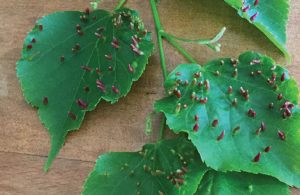
Tiny Eriophyes tiliae, an eriophyid mite, is a picky little critter that – as its specific name implies – makes itself known on linden (or basswood) trees. You cannot see the beast itself, but you can see the distinctive gall it creates on the upper side of a leaf. And even these are small.
The so-called nail galls normally appear in spring on a newly developed leaf, the adult mite having overwintered in a bark crevice or near a bud. As the mite feeds, a chemical in its saliva reacts with the leaf cells, causing the cells to expand and creating a gall. These appear greenish-yellow to pink at first, then mature to red or brown.
Brilliant red nail galls on linden leaves are produced by Eriophyes tiliae, an eriophyid mite that, as its name implies, prefers to make a home on the leaves of Tilia species.
There are usually several galls scattered about the leaf surface, and while their appearance may be somewhat startling (if not amusing), it’s rare that an entire plant will be affected, and the damage is cosmetic. There’s no need for control, unless a client insists. In that case, removing the offending leaves may be just the ticket. The nail galls shown here appeared on one small branch of a very large tree. They just happened to be overhanging the sidewalk.
The post Beware of Nail Galls on Linden appeared first on AmeriNursery.com.
]]>The post ASLA Reports Top 10 Projects with “Expected Highest Consumer Demand” appeared first on AmeriNursery.com.
]]>
Going native, going high tech. That doesn’t make much sense, does it? But according to the most recent customer preference survey conducted by the American Society of Landscape Architects, that’s what customers want.
According to the ASLA, “Customers prefer sustainable — yet tech-friendly — design elements for their outdoor living spaces. … For the first time, wireless/Internet connectivity entered the top 10 project types, suggesting that people want a back yard that allows them to enjoy both nature and connectivity.”
Here are the Top 10 project types with the “expected highest consumer demand”:
- Native/adapted drought tolerant plants – 82.31 percent
- Native plants – 81.60 percent
- Low-maintenance landscapes – 79.25 percent
- Food/vegetable gardens (including orchards, vineyards, etc.) – 76.52 percent
- Permeable paving – 76.31 percent
- Reduced lawn area – 72.66 percent
- Fire pits/fireplaces – 71.51 percent
- Drip/water-efficient irrigation – 71.05 percent
- Wireless/internet connectivity – 70.77 percent
- Rainwater/graywater harvesting – 70.32 percent
Seems “connectivity” has a couple of meanings. Homeowners want to connect with nature – topping the list are not only plants, but natives or adapted plants that require less water. And homeowners want to connect with the vast universe that is the Web.
“The fact that more consumers want outdoor wireless access shows that they want expanded options for remaining connected to their devices,” said Nancy C. Somerville, Hon. ASLA, executive vice president and CEO of ASLA.
“Well-designed residential landscapes provide social interaction, enjoyment of nature and physical activity, while also reducing water use and stormwater runoff,” said Somerville.
Sounds a little like having your cake and eating it, too. But outdoor kitchens didn’t rank highly in this survey.
Consumer requests were broken down further among a number of categories, and the three most requested outdoor design elements are fire pits/fireplaces, wireless/Internet connectivity and lighting.
No. 1 among the most desired landscape and garden elements is native plants. Low maintenance landscapes and food/vegetable gardens follow closely. Next?
- Rain gardens
- Organic gardens
- Water-saving xeriscape or dry gardens
- Plant walls/vertical gardens
- Rooftop gardens
- Decorative water elements (ornamental pools, fountains, splash pools, waterfalls, grottos, water runnels or bubblers)
- Ponds/streams
The most popular elements of sustainable design are native/adapted drought tolerant plants, followed by permeable paving and reduced lawn area. Water-efficient irrigation, rainwater harvesting, recycled materials, solar-powered lighting, compost bins and geothermal heated pools also seem to be popular.
Wouldn’t it be nice if connecting with nature meant leaving behind the other distractions? Some of us would think so. But if the new “connectivity” means that more homeowners and more generations are connecting – in whatever way they’re comfortable – then by all means, let’s embrace it.
The post ASLA Reports Top 10 Projects with “Expected Highest Consumer Demand” appeared first on AmeriNursery.com.
]]>The post Guide to Salvia guaranitica ‘Black and Blue’ appeared first on AmeriNursery.com.
]]>
It’s not often that I envy those who live in warmer climes. No disrespect intended, but as a dyed-in-the-wool fan of winter, I’d rather spend my time in the snowy mountains than on sunny beaches. On the other hand, I’d give up nearly all my sweaters and boots to be able to grow Salvia guaranitica ‘Black and Blue’ as a perennial. I do grow it; residing in Zone 5, I have to settle for potting up container after container of annual sage. Nevertheless, it’s among the first plants I look for each spring, and there are several designated planters that wait patiently every year for their new crop of Black and Blue.
Name: Salvia guaranitica ‘Black and Blue’
Common name: Black and Blue sage, anise-scented sage
Hardiness: Zones (7)8 to 10
Mature height: 2 to 5 feet
Mature spread: 2 to 5 feet
Classification: Tender herbaceous perennial or subshrub; grown as an annual in cooler zones
Landscape use: Borders, mixed beds, cutting gardens, containers
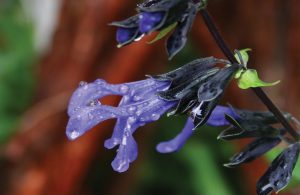
Ornamental characteristics: Clear, medium to dark green leaves emerge from deep, very dark green to purple to black stems; two-lipped, tubular, deep cobalt-blue flowers are supported by nearly black calyxes
If you’re fortunate enough to grow in zones 7(8) to 10, you know the joy of siting this perennial sage in borders or in cutting gardens, and when planted en masse, it can come to resemble a small shrub or hedge. It’s a fast-growing plant, reaching 3 to 4 feet tall and wide in a rounded, clump form, although some very happy plants can reach up to 5 or even 6 feet tall. Grown as an annual, in containers, mine tend to top out at 2 to 2.5 feet, although when the pot is large enough, a few have grown to 3 feet. Without the support of fellow plants, they benefit from slender plant hoops that are quickly camouflaged by the foliage – although in the years that I’ve forgotten to insert the supports, the plants do just fine.
Salvia can be grown from seed, but ‘Black and Blue’ is best propagated from cuttings, and I’ve relied on starter plants, which thrive on the sunny front steps. (There are a few plants on the shady north side of the house, and these perform admirably, although some of the stems tend to overreach if they don’t receive a few hours of direct sun.) It doesn’t take long before the foliage elongates to about 2 to 3 inches and the stems darken; by early to mid-summer, the black calyxes develop and stop-you-in-your-tracks, cobalt-blue flowers emerge.
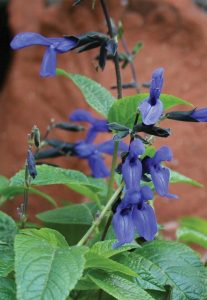
This is when Black and Blue salvia truly shines. Individual flowers are large, reaching nearly 2 inches from stem to tip, and while they resemble the typical, tubular, two-lipped salvia flower, their dramatic color and size put them in a class by themselves. (One neighbor commented that she’d never seen a blue snapdragon. She still hasn’t.) Bloom is reliable until frost. Deadheading tends to encourage new blooms, but the only time I’ve “deadheaded” is when I’ve selected a few stems to use in a vase. More often than not, though, I leave the flowers for the pollinators.
Bees will visit and butterflies love the plant, but this salvia has proved to be irresistible to the local hummingbird population. It’s not unusual to see the plants waving with activity, and often, when the windows are thrown open in the summer, I can hear the deep buzz from my seat inside the house. Several hummingbird feeders are nearby, and these are routinely drained and cleaned, then refilled, then drained and cleaned … as long as the Black and Blue is in bloom. I’ve learned to leave shallow dishes of water for the exhausted little hummers, because it seems they can’t tear themselves away from the blooms. Neither can I.
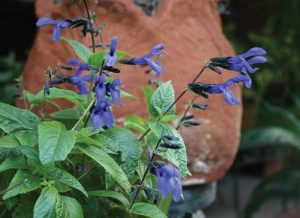
In warmer zones, where the plants are perennial, they suffer from few insect or disease problems, although the occasional visit by downy and/or powdery mildew has occurred. Friends in Austin, Texas, say it’s among the cleanest plants they grow; that observation is echoed by friends in New Mexico. More humid microclimates would encourage mildew, but heat and humidity in the Chicago area can be wicked. Even when I’ve crowded containers so that the plants have tended to intertwine, they’ve remained healthy all season.
Inground or in containers, Salvia guaranitica ‘Black and Blue’ consistently provides breathtaking blue blooms and a feast for hummingbirds and other pollinators. Easy to grow and easy to maintain, it’s a must-have if you want to stop traffic, both human and avian.
The post Guide to Salvia guaranitica ‘Black and Blue’ appeared first on AmeriNursery.com.
]]>The post American Rose Trials for Sustainability Introduces its First Winning Roses for 2018 appeared first on AmeriNursery.com.
]]>Steve George May 17, 2017

American Rose Trials for Sustainability®(A.R.T.S.®) is a new U.S. landscape and garden rose trialing program introducing its first winning roses – seven in all – for 2018.
A.R.T.S.®began in January 2012, and was prompted by the disbanding of the All-America Rose Selection (AARS) program, an industry-managed U.S. rose trialing program that began in 1938. Unfortunately, multiple member rose producers went out of business during the recent recession and that, in part, contributed to AARS’s closure.
The Mission
The mission of A.R.T.S.® is: “To identify, through regional evaluation and testing under low-input conditions, the most disease and pest resistant, hardiest and most garden-worthy rose cultivars and to provide objective, accurate and reliable information about the cultivars tested in each region to industry professionals and the gardening public.” A clear sense of purpose at its foundation, scientific rigor, program transparency and stakeholder representation contribute to the strength of A.R.T.S.®.
Why now?
The need for an independent trialing program for new roses in the U.S. is greater than ever due to the strong pace of new roses coming into the marketplace. Over the last decade, the horticulture industry has evolved and the trend is for fewer and larger nurseries to grow and distribute a wider range of plant species. Many large nurseries are also managing their own branded plant programs. Exclusive cultivars of roses and other species are sought to help create unique plant collections to distinguish and draw customers to elite brands. The result is a steady supply of new roses entering the marketplace by a more diverse group of nurseries than ever. New roses are not only coming from U.S. breeders, but from several international rose breeders, as well. Having an unbiased, independent evaluation and awards program that trials new roses under low-input conditions across U.S. climates is a valuable contribution that A.R.T.S.® is eager to provide the horticulture community.
Leading the way
From its inception, it was critical for A.R.T.S.® to have a leadership team not only representing industry, but also public gardens, rose society members, university scientists, landscapers and, ultimately, the general gardening public. Having a strong mix of rose stakeholders represented, it is possible to better identify the range of needs and available resources from each group and strategically develop and sustain the most relevant rose evaluation and awards program possible.
One of the first tasks for the A.R.T.S.® leadership team was to determine the criteria for rose evaluation. For award designations to be meaningful, the characteristics being evaluated must reflect what U.S. gardeners and landscapers truly want and need, especially including plant attributes that are not readily observable in the retail setting (for example, disease resistance, mature growth habit, winter hardiness, and so on). A wide range of rose stakeholder groups was consulted to understand which cultivar characteristics they valued and their relative importance. Fortunately, there was strong consensus for what people valued, which greatly streamlined the criteria development process. In the new scoring system, flowering throughout the season and attractive floral attributes (including fragrance) are highly valued (42.5 percent of score), along with foliage health and quality (45 percent) and a pleasing, natural plant growth habit (12.5 percent). Stakeholders consistently emphasized the importance of not using pesticides on the trial roses in order to effectively assess tolerance/resistance to regional diseases and insect pests. The A.R.T.S.® team listened, and no fungicides, insecticides or miticides are applied to the trial plants.
How plants are evaluated
The A.R.T.S.® leadership team includes university scientists with years of experience in rose research and conducting field trials. Their expertise has led to the adoption of a number of practices that enhance scientific credibility. These techniques include:
- a planting design that uses blocking, randomization and replication of cultivars;
- wider spacing to more effectively assess plant habit;
- use of the Kppen Climate Classification system (see sidebar) to more accurately delineate climatic regions; and
- having the same set of reference cultivars (that is, controls) planted in each block at each trial site across a region.
Blocking and randomization takes the multiple plants of each trial cultivar and separates them within the trial area, which helps account for unintended effects of variations in soil, airflow, light intensity and other conditions at a site. This is accomplished by separating each trial site into multiple planting blocks or beds, and planting one of each trial rose in random order in each block. The use of established reference cultivars (currently The Knock Out® Rose and Carefree Beauty) planted at each site aids in detecting differences in weather patterns and disease and pest pressure from year to year, and helps to ensure that award determinations are as unbiased, consistent and scientifically based as possible.
It is difficult to find a rose, or any plant, that excels in all climates. Therefore, regional trialing and regionally determined awards are crucial in helping people identify well-adapted cultivars for their local area. Temperature and moisture are the two most critical factors that determine climate. Unfortunately, delineating regions based on the combination of these two factors does not result in a U.S. map split into clean-cut lines. A.R.T.S.®uses the Kppen Climatic Classification System to distinguish regions, a system that is well-recognized by ecologists. The organization’s website does a great job of helping people better understand the regionality of the program.
Read more: Keeping Roses Clean
The trial sites
Most of the trial sites are open to the public and are hosted by botanical gardens, municipal parks and universities. Trial site partners believe in the mission of A.R.T.S.®and have a passion to be regional leaders in environmental rose horticulture. Every A.R.T.S.® planting is maintained and evaluated over a two-year period. Some gardens stagger and host a new trial each year with one set of roses in year one of evaluation and another in year two. Gardens with limited space are paired with another trial site in their region and work together, with each partner hosting a new planting every other year. There are opportunities for additional gardens and volunteers to participate and thereby accommodate gardens that need to take a season off periodically for renovations or other reasons. The hope is to grow the program to the point that two gardens will be hosting the same A.R.T.S.® trial in each climatic region each year.
The Köppen Climate Classification System
In essence, the Köppen system classifies the world’s climates, identifying five major climate types based on the annual and monthly averages of temperature and precipitation. Each is designated by a capital letter, thus:
- A. Moist Tropical Climates: characterized by their high temps year round, plus significant amount of annual rainfall
- B. Dry Climates: characterized by little rain and a dramatic daily temperature range (two subgroups are identified with the “B” climates — S is semiarid or steppe, and W is arid or desert)
- C. Humid Middle Latitude Climates: characterized by land/water differences. For example, these climates feature warm, dry summers and cool, wet winters
- D. Continental Climates: found in the interior regions of large land masses. Total precip is not high and seasonal temperatures can vary widely
- E. Cold Climates: characterized by permanent ice and tundra; above-freezing temps are present for only about four months of the year
Subcategories are designated by a second, lower case letter each distinguishing specific season characteristics of temperature and precipitation; a third lower case letter may further indicate specific variations in climate.
The awards
Awards are determined on a regional basis considering each trial rose’s overall performance across the two growing seasons and its performance relative to the reference cultivars. Because awards are based solely on performance, there is no limitation for how many or few roses can win each year. For each region that a trial rose demonstrates superior performance, it receives the A.R.T.S.®Local Artist award.
If a rose earns four or more Local Artist awards, it is designated as a Master Rose, the highest award the program bestows honoring the selection’s wider range of adaptability. There are seven roses earning awards for 2018 – three Master Rose awards and four Local Artist awards.
A.R.T.S.® is excited to serve as the new premier U.S. rose awards program representing and serving multiple horticulture stakeholder groups for garden and landscape roses. With the solid evaluation protocol and data determining regional awards, the outcome is that consumers are highly likely to be successful with A.R.T.S.® award-winning roses for their region when plants are given basic care. Rose breeders and nurseries especially are getting behind A.R.T.S.® and are eager to enter their roses; in fact, seven nurseries submitted entries for the 2017/18 trials.
We predict these seven 2018 winning roses will mark the start of a new and enduring American legacy for rose horticulture.
2018 Master Rose Awards
The Peachy Knock Out Rose (‘RADgor’) is a semi-double, peachy pink shrub rose with a mounded plant habit. Bred by William Radler and introduced by Star Roses and Plants.
Image Courtesy Of Star Roses and Plants

Double 10TM (‘LIM10’) is a petal-packed, vibrantly colored orange hybrid tea. Bred by Ping Lim and introduced by Altman Plants.
Image Courtesy Of Altman Plants
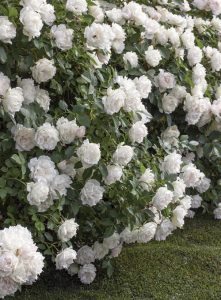
Icecap (‘MEIradena’) is a double-white shrub rose with a mounded plant habit. Bred by Meilland International and William Radler and introduced by Star Roses and Plants.
Image Courtesy Of Star Roses and Plan
List of A.R.T.S.® Trial Gardens
- Boerner Botanical Gardens, Hales Corners, Wisconsin
- City of Farmers Branch, Farmers Branch, Texas*
- City of Tyler, Tyler, Texas*
- Descanso Gardens, La Cañada Flintridge, California*
- Green Bay Botanical Garden, Green Bay, Wisconsin*
- Longwood Gardens, Kennett Square, Pennsylvania*
- Louisiana State University, Hammond, Louisiana*
- Mesa Community College, Mesa, Arizona
- Morcom Rose Garden, Oakland, California
- Naugatuck Valley Community College, Waterbury, Connecticut*
- North Dakota State University, Absaraka, North Dakota*
- Swarthmore College, Swarthmore, Pennsylvania*
- Tulsa Parks and Recreation, Tulsa, Oklahoma*
- University of Minnesota Extension – Clay County, Moorhead, Minnesota*
- University of Utah, Salt Lake City, Utah
* Sites hosting the trial group of roses resulting in the 2018 A.R.T.S.® winners
Read more: Keeping Roses Clean: Testing Roses at the FPS
2018 Local Artist Awards
Farruca Courtyard® (‘POUlcy032’) is a compact growing climber with double, deep red blooms. (Won in region: CSA) Bred by Pernille & Mogens Nyegaard Olesen and distributed for Poulsen Roser A/S by several growers and brokers in North America among others; Rocket Farms Inc., Aldershot of Canada Ltd. and Griffin Greenhouse Supplies Inc.
Image Courtesy Of Poulsen Roser A/S
Look-A-Likes® BougainFeelYa (‘MEIckinava’) is a compact, spreading shrub rose with vibrant red single blooms. (Won in region: DFB) Bred by Meilland International and introduced by Star Roses and Plants.
Image Courtesy Of Star Rose and Plants
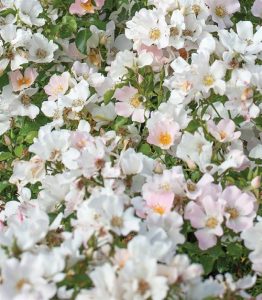
Look-A-Likes® Apple Dapple (‘MEIplumty’) is a spreading shrub rose with blush-pink, single blooms. (Won in regions: CFA and DFB) Bred by Meilland International and introduced by Star Roses and Plants.
Image Courtesy Of Star Roses and Plants
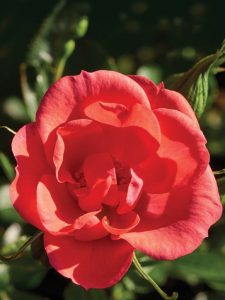
Petaluma Cover® Towne & Country® (‘POUltc004’) is a compact, spreading shrub rose with semi-double, vibrant, orange-pink blooms. (Won in region: DFB) Bred by Pernille & Mogens Nyegaard Olesen and distributed for Poulsen Roser A/S by several growers and brokers in North America among others; Rocket Farms Inc., Aldershot of Canada Ltd. and Griffin Greenhouse Supplies Inc.
Image Courtesy Of Poulsen Roser A/S
The post American Rose Trials for Sustainability Introduces its First Winning Roses for 2018 appeared first on AmeriNursery.com.
]]>The post Controlling Weeds in Greenhouse Prop Systems appeared first on AmeriNursery.com.
]]>
An Agricultural Research Service (ARS) horticulturist is exploring an alternative method for controlling weeds in greenhouse propagation systems by using steam or hot water to kill weed seeds. The project, conducted under the auspices of a Horticultural Research Institute (HRI) grant and co-funded by the Floriculture and Nursery Research Initiative, is headed by Dr. James Altland.
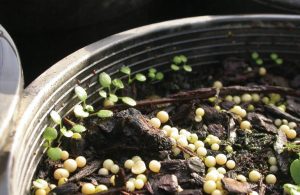
Altland and his colleagues at ARS in Wooster, Ohio, are documenting the critical temperature and exposure time needed for killing weed seeds with hot water or steam. Weed control in propagation is difficult because it primarily occurs in greenhouses or other covered structures where herbicides are neither labeled nor safe for use. Reuse of plastic propagation trays and containers exacerbates the weed problem. Seeds of many weeds, most notably bittercress (Cardamine flexuosa) and creeping woodsorrel (Oxalis corniculata), stick to plastic containers and trays and are reintroduced into the production system when these containers and trays are reused.
Heat from steam or hot water kills weed seeds. There is an abundance of research on the use of soil solarization to reduce weed seed populations and other pests in soil. Soil solarization, however, is a slow process that involves covering the ground with plastic to heat soil over several days or weeks. Research on soil solarization has established thermal killing temperatures over the range of 40° to 70° C with exposure times of hours to days. Use of hot water or steam to kill weed seed would ideally use higher temperatures for shorter periods of time (seconds or minutes).
Large shipping containers can be converted to steam-treat recycled plastic containers for both weed and disease control.
There is also evidence from some nursery producers that heat or steam provides effective weed control. In Oregon, some nurseries have adopted the Grower Assisted Inspection Program (GAIP) to prevent the spread of the pathogen Phytophthora ramorum. Part of this program includes the use of hot water for killing P. ramorum on reused plastic by dipping it in a water tank at 80° C for 15 minutes. While this control point was intended to prevent the spread of P. ramorum, it has also proved very effective in reducing bittercress populations.
Currently, there is no published information on how high the temperature or how long the exposure time must be to provide 100 percent control of weeds common in greenhouse propagation. The most cited publication is over 60 years old and suggests that “most weed seeds” are killed with temperatures of 70° to 80° C when exposed for 30 minutes. However, the same authors indicate that a few resistant weed seeds require 90° to 100° C.
So far, Altland’s research has found that creeping woodsorrel required exposure to 90° C for at least 5 minutes for 100 percent control. Bittercress was completely controlled with 90° C water at just 1 minute.
Altland’s research is updating an old tool with specific information on which temperatures and exposure times can be used to eliminate weed seeds between successive crops in propagation.
The post Controlling Weeds in Greenhouse Prop Systems appeared first on AmeriNursery.com.
]]>The post Guide to Asclepias tuberosa (Butterfly Weed) appeared first on AmeriNursery.com.
]]>
One of the last times I took my 90-something mother to a garden center, she was immediately attracted to the glowing orange plants at the entry. I hadn’t even put the car in park before her door was open and she was fumbling with the seat belt, eager to hustle over to see what those beautiful plants were.
“Oh,” she sniffed, “it’s milkweed. That’s the plant I used to throw out every time you brought it home from the field next door.”
Well, sort of. True, I used to drag home all manner of plants from the fields surrounding the house (sneezing all the way), but the milkweed pods I collected were likely Asclepias syriaca, common milkweed. And a weed it was.
Name: Asclepias tuberosa
Common name: Butterfly weed
Hardiness: Zones 3 to 9
Mature height: 1 to 2.5 or 3 feet
Mature spread: 1 to 2 feet
Classification: Herbaceous perennial
Landscape use: Among the best choices for butterfly gardens and naturalized or native plant areas; excellent in mixed borders when planted en masse or as brilliantly colored focal points
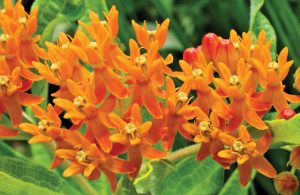
Ornamental characteristics: Umbels of bright orange to yellow-orange flowers top tall, sturdy stems; if left to seed, a distinctive horny green pod develops, which splits open to reveal seeds borne on silky tails
Asclepias tuberosa is also a “weed” of sorts: Its common name is butterfly weed, and although it’s related to common milkweed, its garden-worthy attributes have elevated it to rock star status in the garden. In fact, A. tuberosa was selected by the Perennial Plant Association as the PPA 2017 Perennial Plant of the Year because, well, it’s a great plant. It’s native to the continental U.S. (with the exception of Northeastern states), and it’s found in Ontario and Quebec. It requires very little management or extra care. It’s resistant to all manner of insults, including insect predators and diseases. It’s also resistant to deer. And true to its name, it’s a real butterfly magnet. The flowers provide nectar for a host of butterflies and moths, and the leaves are a favored food source for monarch caterpillars.
Standing up to 2.5 to nearly 3 feet tall, the plants are topped with clusters of blazing orange flowers that serve as beacons for wildlife and garden aficionados alike. Upon closer examination, flowers are easily identified by their “five over five” or “five up and five down” configuration: Each flower has five petals that droop and five erect petals, called hoods, each of which has a horn. These sickleshaped horns curve slightly inward.
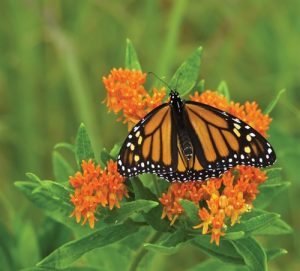
This is making it more complicated than a description need be, but it’s an interesting bit of info that heightens one’s appreciation of the intricacy of flowers. If you’re fortunate to have a butterfly’s eye view of the individual flowers, their geometry is fascinating. I’ve stolen across the lawns to study my neighbor’s planting — my garden is most decidedly not orange — and my forays have only increased my interest. From afar, I enjoy a swath of happy color; up close, my neighbor and I have inspected the petals and individual blooms on each umbel. That is, we do so when we can don’t have to compete with the bees and butterflies.
Butterfly weed is easy to grow in average soils in full sun; it’s drought tolerant and handles dry soil well. New growth emerges late in the spring in the Upper Midwest, and flowers bloom reliably from late spring through late summer. They’re often used in cut flower arrangements, and if they’re snipped for vases or simply deadheaded, a new flush of blooms will appear within a month or so.
Once the flowers are spent, 3- to 6-inch-long, spindle-shaped green pods appear and when mature, they’ll split open to reveal soft and silky, silvery white hairs attached to a small seed. (The pods and fuzzy seed tails closely resemble those of the related milkweed.) These wispy hairs help the seed to float on the wind, but the pods are decorative and often are harvested for dried arrangements.
Foliage is a clear, clean, medium green; lance-shaped leaves grow about 2 to 5 inches long, spiraling neatly up each sturdy, fuzzy stem. Despite the relation to milkweed, the stems do not carry the same milky sap that can be irritating to humans and toxic to insects.
When siting Asclepias, be sure to choose a permanent location. Although the plant self-sows if seed pods are left to open and disperse, the mature plant has a very sturdy tap root and does not take well to transplanting. And that’s assuming you’re able to dig up the root intact.
Mom would have loved Asclepias tuberosa if she had been able to get past the “weed” in the name. This native offers long-lasting, reliable and brilliant color, is virtually maintenance free and provides welcome nourishment for pollinators. Give them just a little bit of love and they give back in spades.
The post Guide to Asclepias tuberosa (Butterfly Weed) appeared first on AmeriNursery.com.
]]>The post The Impact of Temperature on Herbicide Activity appeared first on AmeriNursery.com.
]]>
No better source than the Horticultural Research Institute’s Journal of Environmental Horticulture. Just released from the JEH:
Weeds are arguably the most common pest problem in landscape management. Almost everyone can spot a weed, especially when it’s chickweed sticking out like a sore thumb in a stand of dormant bermudagrass in March.
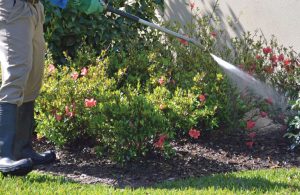
Landscape managers face the challenge of scheduling a variety of activities and, as a consequence, can struggle to stay ahead of spring weed control. Often the first herbicide application is timed in conjunction with mulch laying, creating a labor bottleneck. One strategy to overcome this is to move herbicide applications from springtime to typically less-busy periods, such as late fall/early winter or late winter. This leads landscape managers to ask: Do herbicides still work when applied in cool temperatures?
Research on just this subject was recently reported in the Journal of Environmental Horticulture (JEH), the publication of the Horticultural Research Institute. JEH is the only peer-reviewed, scientific journal dedicated to the green industry and serves as the outlet for research pertinent to our industry.
“In an already tight labor market, the importance of keeping up with the latest weed control research strategies regarding timing and efficacy of applications cannot be taken for granted by today’s landscape manager. In my role, I am very interested in the effects of temperature on weed control strategies, so that I can spread the traditional seasonal workload across 12 months in an attempt to retain more personnel year-round while improving quality and reducing potential overtime costs,” adds Joe Ketterer, Director of Quality and Efficiency with Ruppert Landscape.
Weed scientists agree that air temperature impacts how well an herbicide works. When applied during cool temperatures, herbicides generally do not work as well as when applied during warm temperatures. This is due to a few factors.
First of all, plants’ growth and metabolism slow dramatically in cool weather, which lessens herbicide absorption and translocation within the plant. Secondly, certain physiological changes occur in plants in response to cool temperatures. For example, the wax layer coating plant leaves gets thicker, which limits herbicide penetration (and ultimately efficacy). The increased wax layer also creates a hydrophobic environment, which decreases an herbicide’s leaf wetting capability.
Herbicide formulation merits a mention in this discussion as well, because it may overcome some of the above-mentioned impediments. Ester formulations, as opposed to amines, are more soluble in the plant cuticle – which means it has a better chance of breaching a fortified wax layer – and are more easily absorbed by plants. Combining a contact herbicide (such as carfentrazone or sulfentrazone) with a systemic (such as 2,4-D or dicamba) is another tactic to increase weed control.
Dr. Jeff Derr, Virginia Tech, conducted a series of experiments that accounted for these variables. He assessed the impact of temperature on herbicide efficacy against winter annuals (ivyleaf speedwell, henbit, common chickweed, and purple deadnettle) in turfgrass (both cool and warm season varieties). Contact and systemic herbicide activity was compared alone and in premix combinations, and both ester and amine formulations were included. The following products were tested:
- Surge (sulfentrazone + 2,4-D, amine + MCPP + dicamba)
- QuickSilver (carfentrazone)
- SpeedZone Southern (carfentrazone + 2,4-D, ester + MCPP + dicamba)
- PowerZone (carfentrazone + MCPA, ester + MCPP + dicamba)
- SpeedZone (carfentrazone + 2,4-D, ester + MCPP + dicamba)
- Trimec Classic (2,4-D, amine + MCPP + dicamba)
Study results prove valuable for landscape managers. “Control of winter weeds is an important concern for lawn care companies, golf course superintendents, sports turf managers, and others maintaining landscape areas. A concern in winter is the impact of colder air temperatures on the effectiveness of herbicides used for controlling emerged broadleaf weeds. Unless weeds need to be controlled very quickly, landscape managers have a wider window of opportunity to spray post-emergence broadleaf herb-icides than previously thought,” said Dr. Derr.
Using a combination of contact and systemic herbicides, whether a custom tank mix blend or a premix product, increases the chances of winter annual weed control. Products containing carfentrazone (a contact) premixed with a systemic herbicide(s) controlled weeds better than a systemic applied alone. However, premix products in this study contained ester formulations, which also could explain the enhanced performance.
Following with previous studies, Dr. Derr concluded that temperature did affect herbicide activity. Overall, herbicide applications made during warmer temperatures (65° F) injured weeds faster than when made during cooler temperatures (45° F). However, within three weeks after application, weed control was the same, regardless of whether applications were made during warm or cool temperatures.
If a landscape manager opts to prioritize speed of weed control, according to their customers’ preference, then herbicide applications should be made in warmer weather conditions. On the other hand, if time management is a higher priority, herbicides can be applied during cooler weather, when more labor may be available. Selecting ester formulations and combining a contact with systemic(s) products may ensure greater success during cooler temperature applications.
For more information: 2016. Derr, J. and T. Serensits. Impact of application temperature on broadleaf herbicide efficacy. Journal of Environmental Horticulture. 34(4):123-130
The post The Impact of Temperature on Herbicide Activity appeared first on AmeriNursery.com.
]]>