The post HUMULUS LUPULUS appeared first on AmeriNursery.com.
]]>
Okay, so we’ve missed Oktoberfest. The steins are empty, the bratwurst is gone. No worry; there’s always time for hops.
Believe it or not, hop (Humulus lupulus; common hop) has a purpose other than flavoring your favorite brew. It’s a somewhat surprisingly ornamental plant, easy to grow and hardy in zones 4 to 8. Known as a vine, it’s technically a “bine,” a plant that relies on stiff hairs that line its very strong stems to help it climb. Unlike many sturdy vines, it’s an herbaceous perennial that dies back to its cold-hardy crown in fall.
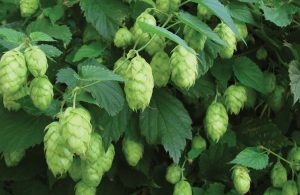
Growing 15 to 20 feet (with a spread of about 3 to 6 feet), hop requires support to thrive. Trained on a trellis, a pergola or arbor, this – oh, let’s just call it a vine – self-clinging vine sports dark green, strongly lobed, heart-shaped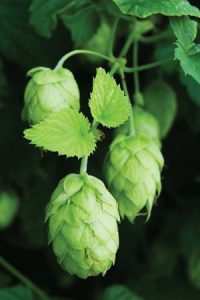 leaves that tend to remain clean throughout the season. Fall color is unremarkable, but come fall, it’s not the leaves that provide the attraction.
Hop is dioecious; male plants produce small, yellow-green catkins, while female flowers and the subsequent seeds are carried in unique, pinecone-like structures called strobiles. (It may take a new plant two to three seasons to flower.) These resemble the flowers of ornamental oregano (Origanum ‘Kent Beauty’ is a good example), although they lack the blush to purple coloring. Strobiles remain medium to rich green until fall, when they turn to tan or buff to golden brown. This is the time they’re harvested and the seeds dried for use in beer production, but allowing them to remain is a much more civilized and ornamental strategy. They have a slight pine-like fragrance, which attracts butterflies and hummingbirds.
Humulus is a member of the Cannabaceae (yes, that includes cannabis, but let’s not go there) and is native to Europe and southwestern Asia as well as North America. So it’s easily grown in soils ranging from average to rich, and it prefers partial to full sun. In very hot Southern locations, it’s best to provide some shade. Regular watering is required for new plants, but once it’s established, hop is relatively drought tolerant.
Name: Humulus lupulus
Trade name: American hop
Hardiness: Zones 4 to 8
Mature height: 15 to 20 feet
Mature spread: 3 to 6 feet
Classification: Vine or “bine”
Landscape use: Grown on trellises, pergolas, arbors and other upright supports, the plants can be used to provide privacy or to screen unsightly structures
Ornamental characteristics: Unique structures called strobiles resemble small, green pine cones; when mature, these turn buff to golden brown and, if not harvested for dried arrangements or to use in a home brewery, provide an additional season of interest
Female plants can be propagated vegetatively. Because the plant is dioecious, at least one male plant should be included in a planting to allow the females to produce seed.
Hop suffers from few pest and disease problems, but sensitive growers may suffer from hop: Contact dermatitis is possible, so it’s wise to avoid contact with the skin.
If your customers are game to try home brewing, hops can provide a homegrown ingredient for that special recipe. But the real value is in its unique ornamental presence.
Cover and Photos: iStock | fotolinchen
The post HUMULUS LUPULUS appeared first on AmeriNursery.com.
]]>The post FIVE FINE VINES appeared first on AmeriNursery.com.
]]>
Baby boomers are moving back to the city, according to demographers, where mass transportation is readily available, and where they have easier access to cultural resources as well as health care and day-to-day necessities. The Gen X and Y cohorts, as well as the Millennials, are putting off home ownership and opting for smaller—or shared—spaces. Garden footprints may be shrinking, at least in some cases, so growing up rather than growing out is the way to go. When your clients and customers ask for plants that fit into their reduced yards and their lifestyles, it’s a great opportunity to recommend vines.
Actinidia arguta and A. kolomikta
Actinidia kolomikta foliage
Photo courtesy of Missouri Botanical Garden
Hardy kiwi is a fast-growing, twining, deciduous woody vine that produces edible fruit—although smaller than the kind you find in the produce department. The 1- to 2-inch-long, greenish yellow, smooth skinned fruit is delicious, however, and for that reason alone it’s a valuable landscape addition.
The species Actinidia arguta will reach 20 to 25 feet long; A. kolomikta reaches about 15 to 20 feet. Both require support, so they’re suitable espaliered or on trellises, fences and arbors, where the vigorous growth habit will fill empty spaces and provide privacy and color. The vine is dioecious; it’s recommended that at least one male be planted for every three to four females in order to produce sufficient fruit. If they’re grown for their ornamental features, males of the A. kolomikta species tend to have showier leaf variegation.
Young, heart-shaped foliage emerges purplish green, but develops outstanding variegation of white and pink on medium green leaves. Small, white and somewhat fragrant flowers bloom in early summer, and often are hidden by the more dramatic foliage. The foliage of A. arguta tends to remain green, but the flowers are more prominent than those of A. kolomikta.
Full sun to part shade is required; A. arguta prefers full sun, while A. kolomikta produces the best foliage color in part shade.
Both species are hardy in zones 4 to 8.
Hydrangea anomala spp. petiolaris
Hydrangea anomala spp. petiolaris
Photo courtesy of Doreen Wynja for Monrovia
Climbing hydrangea supports itself by clinging to surfaces with its aerial rootlets, making it a candidate for a brick or stone wall espalier, or climbing a strong trellis or fence. It needs very little support, so tying and staking is unnecessary. It is slow growing until established, but then develops fast-growing stems that can reach 50 to 80 feet long, so a larger wall is ideal. Flower-producing stems may extend up to 3 feet from the wall on which the vine grows, providing a dense, thick curtain.
Clear green, heart-shaped foliage turns a pleasant yellow in fall, but it’s the impressive, lacecap-type blooms that steal the show. Growing 6 to 8 inches in diameter, the long-lasting, cream and white flowers emerge in summer and remain for weeks, attracting butterflies and other pollinators.
Climbing hydrangea does well in full sun to part shade. It can be pruned annually to control its size.
Hydrangea anomala spp. petiolaris is hardy in zones 4(5) to 9.
Lathyrus latifolius
Lathyrus latifolius
Photo courtesy of Missouri Botanical Garden
Perennial or everlasting sweet pea, like its annual cousin, produces showy, pink to white pea flowers in June through September, providing long-lasting color. The vine supports itself by twining tendrils, which need support in order to grow vertically— a trellis or other structure is required. Alternatively, it can be allowed to ramble over a rock garden or become a groundcover. Because it is an exceptionally vigorous grower, however, it has been known to become invasive in some areas and should be used only in confined spaces.
Broadly winged stems support medium green, oval, 3-inch-long paired leaflets; the fast growing stems can easily reach 6 to 9 feet long (or tall, if provided vertical support). One-inch flowers bloom in racemes of 6 to 12 flowers, and are not fragrant. But the unique shape and delicate color provide the show.
Best performance can be expected in full sun, and although the plants require adequate water while they’re young, they’re drought tolerant once established.
Lathyrus latifolius is hardy in zones 3 to 8.
Parthenocissus quinquefolia
Parthenocissus quinquefolia
Photo courtesy of Missouri Botanical Garden
Virginia creeper is a deciduous, woody vine that attaches itself to structures via adhesive disks that grow at the end of tendrils—no supplemental support is necessary, provided the vine is planted against a brick, stone or wood wall. It can also climb trees, but if allowed to take over, it may choke out the plant that supports it.
Stems can grow 30 to 50 feet, sporting compound-palmate leaves with five leaflets, each extending about 6 inches long. Foliage emerges somewhat purplish in spring, but morphs to a dull, medium green in summer. Small, greenish white, rather insignificant flower clusters often are hidden by the thick foliage.
Fall is when this plant really shines: Come autumn, the sturdy leaves turn purple to varying stages of brilliant, shiny, crimson-red, producing a palette of striking, traffic-stopping colors.
Parthenocissus quinquefolia is tolerant of full shade, although full sun to part shade is ideal. It’s also resistant to deer and to drought, and can even be grown near black walnut.
This strong, proud vine is hardy in zones 3 to 9.
Wisteria frutescens
Wisteria frutescens Amethyst Falls
Photo courtesy of Doreen Wynja for Monrovia
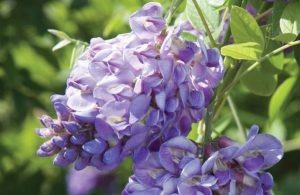
Wisteria is among the vines that can be considered a celebration in itself. Spectacular, fragrant, drooping racemes of pea-like flowers reach to about 6 inches long, blooming in spring after the foliage emerges but before leaves are fully developed. The lilac-purple flowers fade in summer (although additional summer blooming may occur) and give way to smooth seed pods that are narrow and flattened, and can themselves be ornamental.
Wisteria frutescens (American wisteria) twines around its support in a clockwise direction and develops to 40 feet long or more; regular pruning is required to control the size and to encourage flowering. Shorter cultivars, such as Amethyst Falls, grow to about 10 feet long. When trained up and over an arbor, wisteria creates a sheltered space that provides privacy and color. It also can be grown in containers (with support), and can be espaliered onto a trellis.
Performing at its best in partial to full sun, this vine should be sited carefully because it tends to resist transplantation.
American wisteria—which is better behaved than its cousin, Wisteria sinensis (Chinese wisteria) is hardy in zones 5 to 9.
Cover photo courtesy of Doreen Wynja for Monrovia
The post FIVE FINE VINES appeared first on AmeriNursery.com.
]]>The post SHIFTING PERSPECTIVES appeared first on AmeriNursery.com.
]]>
The Greatest Generation. Baby Boomers. Gen X. Gen Y. The Millennials. (Youngest cohort to be determined.)
At any point in time, our population is composed of several generations – living together, working together, moving society forward and fighting like cats and dogs. Looking back through history, however, it’s easy to see that this century is unique: Never before have so many representatives of so many generations coexisted.
As has been the case for centuries, each consecutive generation tends to confound the one that came before. We’re left scratching our heads, wondering what happened and why these kids don’t think and act the way we do. Their point of view – their worldview – is quite different. Their habits don’t mirror ours. Their demands reflect what we perceive to be different values.
Photos courtesy Sally benson unless otherwise noted
But are they really so disparate? Yes. No. Maybe? Take the Millennials, the group of young adults who now compose the largest, most diverse generation in the U.S. Their education and their understanding of the world have been shaped by technology that simply didn’t exist for previous generations. According to research conducted by the President’s Council of Economic Advisors, as well as Pew Research, Gallup polls and far too many studies to list here, members of this generation – in general – tend to value community, family and creativity in their work. Despite the embrace of “family,” however, they tend to marry later than those in previous generations, and they’re putting off home ownership longer than their Gen Y, Gen X and Baby Boomer relatives.
All of this presents a challenge to the green industry, and the rise of the Millennial Generation comes at a time when we’re reevaluating our business protocols following the Great Recession. While it may not represent a seismic shift in the industry, it’s time to shift perspectives and discover the best ways to reach a changing client and customer base.
But how?
Enter SHIFT, the research initiative launched this year through the joint efforts of AmericanHort and the Horticultural Research Institute. It’s a multiyear project tasked with the goal of determining who this generation is, what they want, and how we need to shift our business mindsets and practices in order to capitalize on the opportunities presented by changing consumer demographics and behaviors. It’s a tall order, but it’s a necessary step. This is a huge population of consumers whose shopping and lifestyle habits are very different from what we’re used to addressing.
The research process
Field research began in 2014 and enlisted students in the MindMarket program at the Columbus College of Art and Design. Beginning with the question, “What if … ?” researchers dug deep into the industry’s current business models, utilizing a process called “design thinking,” which employs typical design practices and merges them with business strategies – which is to say, paying close attention to the end users on the front end, and designing for them. As one student researcher so aptly put it, “The benefit of our research is that we did qualitative research instead of quantitive. A lot of times, people with a business background and a business way of thinking about things are very hard-core about the numbers. The benefit of approaching it from design thinking and a qualitative standpoint is that it opens you up to being able to get in there and experience what the customers experience.”

Photo: iStock | Alberto Bogo
Researchers spanned the country to partake in the garden center experience in all regions, determining what worked and what didn’t. Sort of like a secret shopper? Maybe. Once they gathered ideas, they developed “design maps,” which basically serve as suggestions and recommendations to retailers about how to improve the experience – from the young shopper’s point of view. What’s confusing? What’s daunting? What’s boring?
What works? It’s a fresh new perspective that connects the retailer with the purchaser – and from there, the rest of the industry benefits from these insights. The program began with a concentration on retail, but it was soon realized that each segment can and should be addressed.
In a nutshell, “design thinking” is solution-focused exploration. Rather than begin with a negative, a problem – say, “we’re slow to recover from a recession and we’re concerned about where we go from here” – it begins with the ultimate goal in mind: How do we attract new customers? How do we express the value of plants in the new customers’ language?
Early results
Much of this initial work – remember, this project will span several years – was revealed at Cultivate’15 in Columbus in July, where graphic presentations were offered to help industry professionals become attuned to the rising tide of new consumers. For example, researchers suggested that language, including industry specific lingo, often can be intimidating. To many, “gardening” means work. And newer consumers are drawn to ultimate value rather than what goes on behind the scenes, so rather than discussing “weeding,” they respond to the results. It’s “spring cleaning,” it’s a “facelift,” it’s anger management therapy. (Haven’t we all been there?)
Photo: iStock | michaeljung
Visitors were encouraged to offer alternatives to the title, “gardener,” and among the typical suggestions of plant geek, plant nerd and landscape designer were “outdoor living specialist,” “eco-tarian” and “horticultural astronaut.”
The research continues, with the goal being to provide industry professionals new ways to shift their thinking and, ultimately, to adapt new business models to become more successful in reaching the newer generations who expect something different from the status quo.
They say you can’t teach an old dog new tricks, but you can certainly learn to adapt your business when the research shows what works.
More information can be found at the AmericanHort site, http://www.americanhort.org, with updates promised as the project continues.
Cover Photo: iStock | michaeljung
The post SHIFTING PERSPECTIVES appeared first on AmeriNursery.com.
]]>The post CAMELLIA SINENSIS appeared first on AmeriNursery.com.
]]>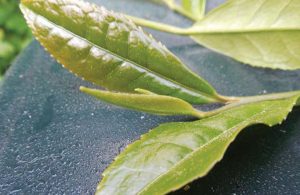
Native to China, Camellia sinensis may be grown in the U.S. as an evergreen shrub or small tree. The leaf tips and first and second leaves are picked to make a beautiful and delicious drink that most people know as green tea or black tea. The recorded history of making beverages from the leaves of Camellia sinensis dates back to at least 2700 BCE in China; however, new research indicates that the use of tea in China dates back 2,000 years before the Egyptian Pyramids were built, placing the use of these plants more than 6,000 years ago. Making and drinking tea has since spread throughout the world, but tea does not grow just anywhere.
Tea has not been widely grown as a crop in the United States, although the tea industry in the U.S. is a $20 billion business. With the efforts of a few entrepreneurs and much experimentation, tea farms are now popping up in the most unlikely places. More than 20 tea farms are now beginning to produce tea in the U.S.
The art of growing tea first came to the East Coast of the U.S. in the year 1793, and the plants initially struggled. In 1869, tea was introduced to the West Coast by the Wakamatsu Tea and Silk Colony in Gold Hills, California. Here too, the tea did not survive. The Gold Rush overshadowed the propagation of tea.
Name: Camellia sinensis
Common name: Chinese tea
Hardiness: Zones 7 to 13
Mature height: 10 to 30 feet
Mature spread: 10 to 30 feet
Classification: Evergreen
Landscape use: Camellia
sinensis is an evergreen shrub that can be used as a hedge or specimen, gaining notoriety in the United States as green tea. Many people are beginning to plant small patches for personal use.
Ornamental characteristics: Widely used in the United States in landscapes as a hedge plant due to its glossy, thick, dark green evergreen leaf accompanied by small, white, fragrant flowers in autumn. (Tender, lighter green young leaves are harvested for tea.) Once established, Camellia sinensis is semi- resistant to drought.
It was at Mendon’s Nursery in Paradise, California, when working as a salesman, that I first met Camellia sinensis. An order arrived from Nuccio’s, a camellia nursery in Southern California. In that order were Camellia sinensis plants, a new variety for me. They captivated me, and I bought all of the plants that came in and planted them at home. I’ve learned that my Camellia sinensis tea plants are offspring plants from horticulturalists involved in the Wakamatsu settlement and the Domoto Brothers Nursery in Oakland, California, in 1883. The Domoto brothers propagated the finest chrysanthemums, roses and camellias, including plants for tea. The next generation of Domoto eventually shared the tea, and a long lasting friendship developed with fellow nurseryman, Julius Nuccio in Southern California. From Nuccio’s Nursery, this tea has found its way full-circle to 100 miles north of the original Wakamatsu Tea and Silk Colony. It is growing in the perfect conditions of the Sierra Nevada foothills in the Golden Feather district of Concow, California.
Tea plants can be grown from seed, from cuttings and from air or ground layering; seed is the preferred method. I 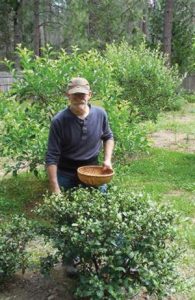 started with 50 tea plants in 2010. In 2015, I have 500 tea plants on a half-acre of land. By tea plantation standards, this is a light planting. Currently, I am harvesting around three quarters of a pound of finished tea per harvest and have had anywhere from five to eight quality harvests per season. Camellia sinensis requires a very specific growing environment to produce good quality tea. It is an acid-loving plant that requires morning sun and afternoon shade. Be sure to have your soil tested to determine the pH, as well as nutrient levels. As it is relatively new to this environment, it’s my experience that the plants are pest and disease free.
It is my understanding that there are new varieties of tea plants coming into the field. Growing them well will be a matter of experimentation, as I have experimented with Camellia sinensis. I think that really having a relationship with this plant is why it has developed into a very fine tea to drink.
The processing of tea is also most important and is an intense art. I practice handcrafted ancient methods and have learned how to create a lovely black tea called Kocha. My tea company, Golden Feather Tea®, honors Camellia sinensis as an artisan wild-crafted tea. Every tip is hand-picked, hand-rolled and gently roasted in the spring or sundried in summer.
Cover and photos courtesy of Golden Feather Tea
The post CAMELLIA SINENSIS appeared first on AmeriNursery.com.
]]>The post UP ON THE ROOF appeared first on AmeriNursery.com.
]]>
The significance of green roofs in urban areas has steadily increased over the past 20 years. In the United States, as well as worldwide, green roofs have become vital components of new construction on a broad variety of buildings, from municipal to commercial and industrial to residential. The benefits of green roofs are measured in environmental, economic and aesthetic or cultural ways. In its simplest form, a green roof may contain a sampling of sedums or other hardy succulents; whereas, many modern green roofs have increased the range and diversity of plants being grown by installing deeper growing medium and changing the way green roofs are utilized or experienced. Whether strictly utilitarian or highly specialized and ornamental, green roofs have a variety of benefits over a traditional roof.
When choosing plants for green roofs it is important to understand that a green roof is not the equivalent of a typical landscape elevated to the top of a building; therefore, appropriate consideration must be given to a plant’s growth habit, native ecosystem and cultural needs, to name a few factors. Many common garden plants will not survive on a green roof. In Green Roof Plants, Ed Snodgrass succinctly describes the ideal traits for a good green roof plant: “The most successful green roof plants are low-growing, shallow-rooted perennial plants that are heat, cold, sun, wind, drought, salt, insect and disease tolerant. Green roof plants should also have a long life expectancy or the ability to self-propagate, and they should require minimal nutrients and maintenance.” Needless to say, selecting the right plants for green roofs is anything but simple.
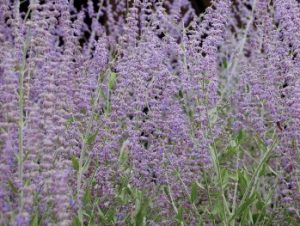
Photo Courtesy of iStock | JoolsBerlin.
The Chicago Botanic Garden Green Roof Gardens
In September 2009, the Chicago Botanic Garden opened its Daniel F. and Ada L. Rice Plant Conservation Science Center, a 38,000-square-foot LEED Gold-rated research and laboratory facility. Atop the Center is a 16,000-square-foot green roof, divided into two 8,000 square foot gardens, which display a variety of North American native plants and exotic plants from around the world. The green roof is both a living laboratory and a beautifully designed garden, with the two-fold purpose of displaying the best plants for green roofs and trialing untested plants for their adaptability to this challenging environment. The ultimate goal of the trial is to develop a diverse and extensive list of recommended plants for green roof culture. Greater plant diversity supports the aesthetic design of a green roof as well as creating a habitat for a variety of beneficial pollinators and other wildlife.
Photo courtesy of iStock | AlpamayoPhoto
Performance report
Between 2010 and 2014, 216 herbaceous and woodytaxa were evaluated in the green roof gardens; 129 taxa on the north roof and 87 taxa on the south roof. Data collection for the 156 taxa planted in August 2009 commenced in April 2010; 60 additional taxa started their trial in June 2011. A combined total of 41,561 individual plants were planted on the green roof in 2009 and 2011.
All plants were evaluated for their 1) cultural adaptability to the growing medium and environmental conditions on the green roof; 2) disease and pest problems; 3) winter hardiness or survivability; and 4) ornamental qualities associated with flowers, foliage and plant habit. In addition, plants were monitored for reseeding and weediness. Final performance ratings are based on plant health and vigor, survivability and longevity, habit quality and flower production, and winter hardiness during the evaluation period.
Nine taxa received five-star excellent ratings for their overall performance and survivability, including Antennaria dioica, Calamintha nepeta ssp. nepeta, Juniperus chinensis var. sargentii ‘Viridis’, Phlox subulata ‘Apple Blossom’, Phlox subulata ‘Emerald Snow’, Phlox subulata ‘Snowflake’, Rhus aromatica ‘Gro-Low’, Sporobolus heterolepis and Sporobolus heterolepis ‘Tara’. Top-rated plants consistently displayed good vigor and robust habits, superior ornamental qualities, disease resistance, heat and drought tolerance, and winter hardiness/survivability throughout the evaluation period. Additionally, 69 taxa received four-star good ratings for their strong performances.up-on-the-roof2
Early success for a portion of the taxa was evident by the end of the first full growing season in 2010.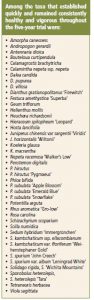
Some taxa were consistently healthy but either slower to establish, slow to increase in size, and/or more affected by environmental conditions; however, by the end of the trial all of these taxa were good performers. Amorpha nana took five years to become a substantial size, although it remained irregular in habit. Asclepias tuberosa was very slow-growing; Baptisia alba var. alba was few-stemmed and open until the fifth season; Campanula rotundifolia was slow to bulk up until the third year; Coreopsis verticillata ‘Zagreb’ always had a loose habit. Eryngium yuccifolium was very slow to gain size; Fragaria virginiana was slow to begin spreading and its stolons were continually damaged during hot, droughty periods. Galium verum was not vigorous until the third season, except for its seedlings; Heuchera micrantha ‘Palace Purple’ grew well but off-colored dramatically in hot weather. Iris tectorum grew best in the shadier section of the bed; Lespedeza capitata was spindly for a couple of years. Liatris ligulistylis was slow to bulk up, often only single-stemmed; Oligoneuron album was fairly static until the third year when it began to reseed widely and the seedlings were more vigorous than the original plants.
Perovskia atriplicifolia was a bit loose in habit; Petrorhagia saxifraga ‘Rosea’ was healthiest interplanted with Phlox subulata ‘Emerald Blue’, whereas it lacked vigor on its own. Potentilla fruticosa was rarely bushy, being loose and uneven in habit; Pycnanthemum virginianum remained loose and often single-stemmed. Salvia ×sylvestris ‘East Friesland’ had a tight habit but never gained any size; Symhyotrichum ericoides ‘Snow Flurry’ stayed prostrate and never developed arching stems like it does in a garden. Symphyotrichum sericeum had an open to spindly habit; Talinum calycinum was slow to establish until it began to reseed; Thymus praecox ‘Coccineus’ did not become vigorous until the third year; and Tradescantia tharpii was slow to increase in size. Oenothera fruticosa ‘Fireworks’ and Oenothera macrocarpa were strong performers for three years but unexpectedly began to decline and die out in 2013.
Monitoring heat and drought
Environmental conditions, especially excessive heat and drought, were closely monitored to determine how they affected the health, vigor and survivability of the plants. Together or alone, heat and drought resulted in weakened plant health, partial vegetative loss, premature dormancy, and/or death. In many instances, plants weakened by environmental conditions during the growing season subsequently died in winter.
At the outset of the trial it was decided that irrigation beyond establishment would be restricted unless deemed necessary to ensure the survival of the green roof plantings. Between 2010 and 2014, irrigation was provided three times during periods of extreme heat and drought; the green roofs were irrigated once in July 2011, June 2012, and July 2013 for 30 minutes each time. All plants were impacted by drought in varying degrees at some time each summer, but plants growing in four inches of media were generally most affected and showed signs of drought-stress first.
Regardless of growing depth, Geum triflorum appeared to be the best indicator plant for drought, always being the first to show signs of heat- and drought-stress. Drought was never severe enough for Geum triflorum to go dormant or for more than a few plants to die, and health and vigor improved quickly once the droughty period was over. The leaves of Echinacea pallida, Monarda fistulosa, Potentilla arguta, Pycnanthemum virginianum, Rudbeckia hirta, Symphyotrichum novae-angliae and S. oblongifolium withered from the bottom up during hot, dry weather; the more severe the drought, the greater the leaf loss. Aquilegia canadensis went dormant in the hottest periods, and Viola sagittata stalled during droughty periods but rebloomed once moisture was available.
Andropogon gerardii and Bouteloua curtipendula seemed to be adaptable to dry conditions, but most of their lower leaves turned brown; Bouteloua curtipendula in four inches generally lacked vigor and some plant losses were noted in droughty periods. Conversely, Koeleria glauca, K. macrantha, Sporobolus heterolepis, and S. heterolepis ‘Tara’ off-colored the least during unfavorable conditions; however, Sporobolus heterolepis and ‘Tara’ showed earlier fall color following droughty periods. Summer dormancy of foliage was observed on Allium cernuum, Anemone caroliniana, Pulsatilla patens, Tradescantia ohiensis, and T. tharpii.
Penstemon digitalis established quickly and remained relatively robust throughout the study.Photo courtesy of 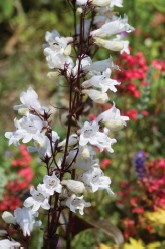 iStock | gardendata
Other microclimates and conditions
A number of unique microclimates were observed on the green roofs, such as intermittent shade, localized incidental moisture, mechanical damage and increased fertility. The green roof gardens received full sun throughout the year except for an area along the southern edge of the north roof where the shadow from the atrium clerestory created some shade. The shadow was at its narrowest in mid- to late June, when only a few inches of shade was provided, and up to four feet wide when the sun was lower in the sky.
A few taxa were specifically sited to take advantage of the shade – Hosta ‘Cracker Crumbs’, Hosta lancifolia, Pachysandra procumbens, and Sedum ternatum ‘Larenim Park’. Shade encroached on a number of other taxa at various times in the growing season, resulting in a portion of the shaded plants being larger and lusher than their counterparts in full sun. In these cases, plant size differences ranged from slight to significant for the following taxa: Calamagrostis brachytricha, Calamintha nepeta ssp. nepeta, Gypsophila repens ‘Roseum’, Hosta ‘Cracker Crumbs’, H. lancifolia, Koeleria glauca, Perovskia atriplicifolia, Prunella grandiflora, Sedum ternatum ‘Larenim Park’, Sesleria caerulea, and Solidago ‘Wichita Mountains’.
Conversely, a few of the taxa that received intermittent shade had plants that were smaller, looser and less vigorous in the shade than in the sunny areas, including Antennaria dioica, Eriogonum umbellatum, Lavandula angustifolia ‘Hidcote’, Linum flavum ‘Compactum’, Scutellaria alpina and Sempervivum ‘Le Clair’s Form’.
Lupinus perennis and Asclepias tuberosa were the only two taxa that died out completely in the first winter of 2009-10. In both instances, the original plants were weak when planted, and while many did not survive transplanting, the remaining plants succumbed to winter conditions. Both taxa were replanted in May 2011, and although most of the Asclepias tuberosa survived the replanting, none of the Lupinus perennis survived for more than a few weeks.

Some taxa were not well-suited to the environment and growing conditions on the green roofs, resulting in the gradual to rapid decline of plant health and eventual death before the end of the trial. Generally, these taxa lacked vigor or remained small, and in many cases, gradually died out over successive winters. The 30 taxa that did not complete the trial are noted in the full report.
Pest threats
Diseases and pests were fairly insignificant considering the variety of taxa and the sheer number of plants on the green roof. Powdery mildew, rust, leaf spot, phomopsis blight, aphids and lace bugs were the only problems observed. Minor powdery mildew was observed in multiple years on Monarda fistulosa, Penstemon digitalis, P. hirsutus, Symphyotrichum novae-angliae and S. oolentangiense. Only penstemons were troubled by foliar rust, with varying infection rates noted on Penstemon digitalis (minor), P. digitalis ‘Husker Red’ (severe), P. grandiflorus (moderate), P. grandiflorus ‘Prairie Snow’ (minor), P. hirsutus (minor to moderate), and P. hirsutus ‘Pygmaeus’ (minor).
A variety of plants were affected by bacterial or fungal leaf spotting including Fragaria virginiana, Hosta lancifolia, Potentilla arguta, Rudbeckia fulgida and Symphyotrichum novae-angliae. Juniperus horizontalis ‘Wiltonii’ was periodically troubled by phomopsis tip blight (Phomopsis juniperovora), but J. chinensis var. sargentii ‘Viridis’ was not. Spider mites were an occasional pest on Asclepias tuberosa, ranging from insignificant to severe infestations depending on the year. Chrysanthemum lace bug (Corythucha marmorata) attacks a variety of ornamental plants in the Aster family, such as chrysanthemums, asters, goldenrods, sunflowers and black-eyed susans, and was by far the most significant pest issue for Ratibida pinnata, Solidago rigida, Symphyotrichum ericoides, S. novae-angliae and S. oolentangiense. Infestations were typically severe, resulting in sickly foliage and weakened health.

Photo courtesy of Chicago Botanic Garden
Winter loss
Data collection began in April 2010 with an assessment of plant losses during the first winter of 2009-10. Of the original 35,988 plants planted in 2009, approximately 25 percent died during the first winter. In subsequent years, winter losses were never as great as the first winter; winter losses in later years were more commonly associated with weakened plant health due to environmental causes such as drought-stress rather than cold hardiness. In the spring of 2011, plants were added to several winter-decimated plots on the north green roof.
Snow and ice build-up was typically noted along the shaded edge of the north roof for several weeks longer in the spring than in other sections of the green roof; up to six feet into the bed could be covered. This phenomenon caused plants in this area to develop much later than plants growing just feet away. In addition, frost heaving and winter-desiccation were consistent problems for Armeria maritima ‘Alba’, A. maritima ‘Rubrifolia’, Aster oharai, Erigeron caespitosa, E. scopulinus, Penstemon grandiflorus and P. grandiflorus ‘Prairie Snow’. In some years, Heuchera richardsonii and H. micrantha ‘Palace Purple’ were affected to a lesser degree.
Adding color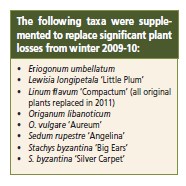
Like any perennial garden, floral displays are vital on green roofs, too. An assessment of floral traits includes flower color, flower size, bloom period and flower production. Many taxa had exceptional floral displays, which enhanced the ornamental aspect of the green roof in spring, summer and fall. Early bloomers such as Viola sagittata, Antennaria dioica, Geum triflorum, Dianthus gratianopolitanus ‘Firewitch’, Phlox bifida, Tetraneuris herbacea, Tradescantia tharpii and cultivars of moss phlox (Phlox subulata), brought the green roof to life beginning in late April and early May.
Summer-flowering perennials provided the longest bloom periods, from June through August. Among the best shows of the summer-flowering taxa were Agastache foeniculum, Amorpha canescens, Bouteloua curtipendula, Calamintha nepeta ssp. nepeta, Coreopsis lanceolata, Dalea candida, D. purpurea, D. villosa, Koeleria glauca, K. macrantha, Penstemon digitalis, P. hirsutus and P. hirsutus ‘Pygmaeus’.
A variety of grasses added greatly to the late season show along with perennials such as Helianthus mollis, Hosta lancifolia, Hylotelephium ‘Rosy Glow’, Lespedeza capitata, Liatris ligulistylis, Salvia azurea var. grandiflora, Solidago rigida and Solidago ‘Wichita Mountains’.
Self-perpetuation
Plant survival on a green roof is due in part to its ability to perpetuate itself, whether by seed or by vegetative means such as rhizomes, stolons or suckers. Whether or not a plant was considered weedy depended on the rate and degree that it spread. None of the vegetative-spreaders in the trial were considered weedy or overly troublesome, at least in the way they were used here. In fact, a number of rhizomatous species were wide-spreading but did not form dense plantings. Artemisia ludoviciana var. albula ‘Silver King’ had a loose rhizomatous habit that worked well mixed with Dianthus gratianopolitanus ‘Firewitch’, where its silvery foliage created a nice contrast but it did not out-compete the dianthus.
Helianthus mollis also had a loose rhizomatous habit, forming a plot of single-stemmed to somewhat bushy plants; its potential to be too wide-spreading and potentially troublesome was noted. Rather than forming discrete clumps, Monarda fistulosa remained loosely stoloniferous. Fragaria viriginiana displayed a robust stoloniferous habit early in the season but the stolons were usually killed during periods of extreme heat and drought. Conversely, Fragaria ‘Stickbolwi’ never formed stolons during the trial, so its effectiveness as a groundcover was limited. Rosa carolina had a suckering habit that formed a thicket between the original plants, but as of 2014 the offshoots had not become problematic to nearby plantings.
Weediness is a nuisance on any green roof, but on a managed roof reseeding or spreading can be kept in check. However, on an unmanaged green roof, the proliferation of one or more species can overrun the roof, smothering or 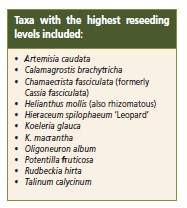 out-competing desirable plants and decreasing the diversity of the planting.
Along with observing how prolifically and quickly a plant spread by seed, we also observed the pattern of dispersion or movement on the green roof. Plants were regularly monitored for seedling production to determine the degree of aggressiveness or weediness.
Despite heavy seed production on all of these taxa, the most aggressively weedy and/or wide-spreading of these species were Chamaecrista fasciculata, Hieraceum spilophaeum ‘Leopard’, Koeleria glauca, K. macrantha and Oligoneuron album.
Koeleria glauca and K. macrantha were grown on different roofs but acted in the same way by filling any open space with seedlings. Chamaecrista fasciculata is an annual species that produced an abundance of lush seedlings each spring, most arising in the same location as the previous year but some seedlings came up several feet away. C. fasciculata was unique in that it did not spread far but its countless seedlings formed a dense mass that smothered all nearby plants.
Rudbeckia hirta is a short-lived perennial that effectively acted like an annual on the green roof. In fact, it was originally planted as a seasonal display for the opening of the green roofs in 2009, but perpetuated itself quite fruitfully during several years of the trial, dispersing widely across the green roof.
Artemisia caudata is a biennial that produces a rosette of basal leaves the first year and a flowering stem the second year before dying out. Although quite a prolific reseeder, the seedlings did not travel far from the original plants. Seedlings of Calamagrostis brachytricha were not an issue in the growing beds, but each spring an immeasurable number of seedlings blanketed the gravel path adjacent to the planting bed.
In a few cases, taxa planted on the north green roof were eventually observed on the south green roof, including Dianthus carthusianorum, Leucanthemum vulgare, Hieraceum spilophaeum ‘Leopard’ and Petrorhagia saxifraga ‘Rosea’. Talinum calycinum was the only taxon that was observed moving from the south to the north roof. Several herbaceous taxa were discovered on the south roof, presumed to have seeded in rather than arriving with the original plants, including Veronica spicata, Lobelia spicata and Coreopsis tripteris. In addition, a number of woody plants seeded in at various times over the course of the trial, including Salix sp., Alnus hirsuta, Crataegus phaenopyrum, Acer negundo, Populus deltoides and Fraxinus pennsylvanica. Woody plants were generally not suited to the growing conditions and did not thrive.
More of this report, including site and study specifics and information on those plants that did not fare well, can be viewed online at http://www.amerinursery.com.
Cover Photo courtesy of Chicago Botanic Garden
The post UP ON THE ROOF appeared first on AmeriNursery.com.
]]>The post HOYA CARNOSA appeared first on AmeriNursery.com.
]]>My grandmother was an early adopter, of sorts. She kept all manner of house plants, especially in the parlor, but toted them out to the front porch in summer to dazzle the neighbors with their color and her horticultural skills. Using tropicals out of zone? Grandma Lill did it long ago.
Most of these plants were acquired through, shall we say, unusual means. In the 1930s, she and my grandfather 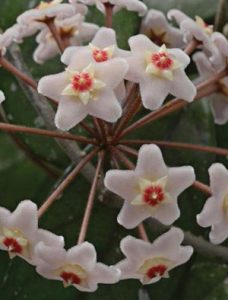 drove Way Out West, as she used to put it, and brought back cacti and succulents the likes of which suburban Chicagoans had never seen. Now used quite commonly, plants like the colorful Kalanchoe were her pride and joy.
One treasure that she shared with the family, however, was her special hoya plant (Hoya carnosa; wax plant). My mother, my sisters and I each were given a cutting and were told to pot it up and “let it be.” This mysterious vine, we were told, was smuggled into the U.S. under the woolen coat of a friend who emigrated from Sweden, and if these young cuttings were kept in the family, they’d live forever. It’s likely she ran across it in someone’s hothouse, but that was Lill: the more fanciful the story, the more valuable the gift.
But she was right about one thing: Hoya is known for its longevity. If memory serves, I received my cutting in 1972. And from what I understand, it’s still thriving. The plant moved with me from dorm rooms to apartments to houses and finally to Colorado, where a friend graciously agreed to “watch” it for me until I returned. That was two decades ago, and she says it’s still blooming regularly.
Name: Hoya carnosa
Common Name: Hoya; wax plant
Hardiness: Zones 10 to 12
Mature height: 2 to 4 feet
Mature spread: Up to 20 feet
Classification: Perennial vine
Landscape use: Houseplant in colder climates; may be used on the patio as a tropical accent
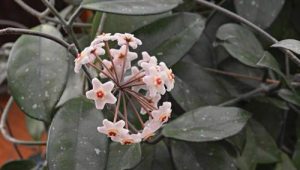
Ornamental characteristics: Glossy, pointed leaves cling to slender vines; small clusters of velvety, star-shaped flowers emerge from tight, waxy buds. Each small flower supports a distinctive, star-shaped corona with a red center. Richly fragrant.
Hoya carnosa is native to India, China and Australia (Sweden? Doubtful.), and has been used in the U.S. as a houseplant in colder climates; as a vigorous climber in more tropical zones. Very glossy and fleshy, pointed leaves grow up to 4 inches long; some varieties are variegated with white spots or margins. It’s been my experience that the vines can grow to 20 feet or so. My mother kept hers in her small greenhouse, where it reached the ceiling and wandered all the way around the structure, weaving itself through and among other plants. I kept mine in check by winding tendrils back among other foliage, and a very dense, bushy plant was the result.
The most thrilling feature of hoya, though, is its distinctive clusters of starshaped flowers, which begin as tight, waxy little pods. I was surprised by these in the eighth or ninth year of my ownership. The vine had grown beautifully in reduced light, but once I gave it bright, indirect light the clusters began to emerge. When the pods opened early one morning, the rich fragrance was enough to rouse me from a sound sleep.
Hoya is not fussy; given filtered sun indoors or out, with a good half day of direct sun, flowers should appear soon after acquisition. Standard potting soil is sufficient, and allow it to become nearly dry between waterings. The Bensons all moved their hoyas easily from living room to deck or patio and back without harm; that is, as long as night temps were mild. Below 45 or 50°, and it’s time to bring them in for the season. Pests? Nothing serious.
The post HOYA CARNOSA appeared first on AmeriNursery.com.
]]>The post HOYA CARNOSA appeared first on AmeriNursery.com.
]]>My grandmother was an early adopter, of sorts. She kept all manner of house plants, especially in the parlor, but toted them out to the front porch in summer to dazzle the neighbors with their color and her horticultural skills. Using tropicals out of zone? Grandma Lill did it long ago.
Photos courtesy of Joseph Berger; Bugwood.org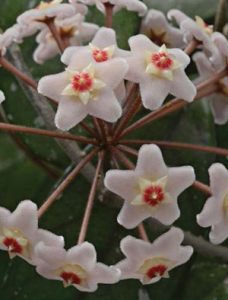
Most of these plants were acquired through, shall we say, unusual means. In the 1930s, she and my grandfather drove Way Out West, as she used to put it, and brought back cacti and succulents the likes of which suburban Chicagoans had never seen. Now used quite commonly, plants like the colorful Kalanchoe were her pride and joy.
One treasure that she shared with the family, however, was her special hoya plant (Hoya carnosa; wax plant). My mother, my sisters and I each were given a cutting and were told to pot it up and “let it be.” This mysterious vine, we were told, was smuggled into the U.S. under the woolen coat of a friend who emigrated from Sweden, and if these young cuttings were kept in the family, they’d live forever. It’s likely she ran across it in someone’s hothouse, but that was Lill: the more fanciful the story, the more valuable the gift.
But she was right about one thing: Hoya is known for its longevity. If memory serves, I received my cutting in 1972. And from what I understand, it’s still thriving. The plant moved with me from dorm rooms to apartments to houses and finally to Colorado, where a friend graciously agreed to “watch” it for me until I returned. That was two decades ago, and she says it’s still blooming regularly.
Name: Hoya carnosa
Common Name: Hoya; wax plant
Hardiness: Zones 10 to 12
Mature height: 2 to 4 feet
Mature spread: Up to 20 feet
Classification: Perennial vine
Landscape use: Houseplant in colder climates; may be used on the patio as a tropical accent
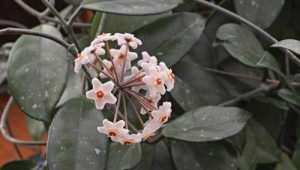
Ornamental characteristics: Glossy, pointed leaves cling to slender vines; small clusters of velvety, star-shaped flowers emerge from tight, waxy buds. Each small flower supports a distinctive, star-shaped corona with a red center. Richly fragrant.
Hoya carnosa is native to India, China and Australia (Sweden? Doubtful.), and has been used in the U.S. as a houseplant in colder climates; as a vigorous climber in more tropical zones. Very glossy and fleshy, pointed leaves grow up to 4 inches long; some varieties are variegated with white spots or margins. It’s been my experience that the vines can grow to 20 feet or so. My mother kept hers in her small greenhouse, where it reached the ceiling and wandered all the way around the structure, weaving itself through and among other plants. I kept mine in check by winding tendrils back among other foliage, and a very dense, bushy plant was the result.
The most thrilling feature of hoya, though, is its distinctive clusters of starshaped flowers, which begin as tight, waxy little pods. I was surprised by these in the eighth or ninth year of my ownership. The vine had grown beautifully in reduced light, but once I gave it bright, indirect light the clusters began to emerge. When the pods opened early one morning, the rich fragrance was enough to rouse me from a sound sleep.
Hoya is not fussy; given filtered sun indoors or out, with a good half day of direct sun, flowers should appear soon after acquisition. Standard potting soil is sufficient, and allow it to become nearly dry between waterings. The Bensons all moved their hoyas easily from living room to deck or patio and back without harm; that is, as long as night temps were mild. Below 45 or 50°, and it’s time to bring them in for the season. Pests? Nothing serious.
The post HOYA CARNOSA appeared first on AmeriNursery.com.
]]>The post KEEPING TRACK OF ROSE ROSETTE DISEASE appeared first on AmeriNursery.com.
]]>
If you don’t gather them today, at least inspect them. They may be infected by rose rosette virus (RRV).
Rose rosette disease can be tricky. Its transmission involves three players: a virus, which is vectored by an eriophyid mite (Phyllocoptes fructiphilus), and the wild and sometimes invasive multiflora rose. For rose rosette disease to be successful, those three elements must be present. To break the cycle of this disease, eliminate one of the trio. Sounds easy. It’s not.
It’s believed that all cultivated roses are susceptible to the disease; this includes shrubs, hybrid teas, floribundas, grandifloras and miniatures. So even if there’s no evidence of multiflora in the immediate area, other roses may already carry the pathogen and can transmit it to your presumably clean stock. Once that happens, removal and destruction of the affected plants is your only option.
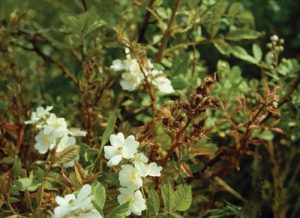
The brownish red panicle of an affected rose stands out against the normal flowers and healthy foliage of an adjacent plant.Photo courtesy James W. Amrine Jr., West Virginia University; Bugwood.org
What to look for
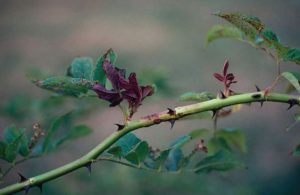
Symptoms of rose rosette disease can be difficult to recognize and confirm, as some signs mimic normal new growth. Many rose varieties are known for their richly colored young foliage, with leaves emerging a deep red to purple in spring. These generally turn green during the growing season, so if a plant continues to display intense red foliage throughout summer, it may have been infected.

Flushes of massed, tangled growth, similar to a witch’s broom, can signal the presence of rose rosette virus. This may be more evident in plants that have been infected for more than a year. Infected plants may display unusually large masses of distorted buds, most of which fail to open. Reddening and/or flattening of the cane can occur. Excessive thorn growth is an obvious sign.
Several of these symptoms appear similar to the signs of herbicide damage – which just adds to the challenge of confirmation.
Plants infected with RRV will decline and eventually die, but the disease may not be fatal for three to four years, by which time nearby plants may have been affected. Some speculate that rose rosette disease has become widespread in recent years due to the popularity of mass plantings, positioning plants close enough together to give the mite – which cannot fly, but can “balloon” on the wind – easy access to its next victim. So vigilance is key.
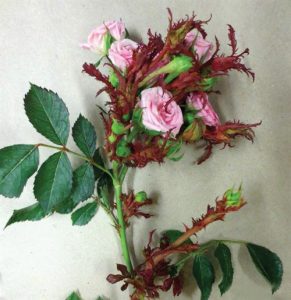
This plant shows the telltale dense flush of intensely colored young foliage, plus a mass of distorted flower buds.Photo courtesy of Sandra Jensen, Cornell University; Bugwood.org
How to manage rose rosette disease
Ultimately, the rose rosette virus is fatal. Once a plant is infected, it will not survive, so management of the disease is about preventing its spread to other plants.
Scouting for symptoms is vital to the long-term survival of nursery stock or landscape installations. It’s a good idea to inspect plants before they’re purchased, and take a look at neighboring plants, as well.
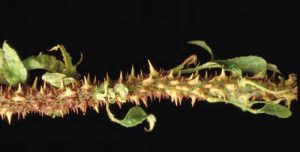
Roses have thorns, but this excessive growth is a sure sign of rose rosette disease.Photo courtesy of John Hartman, University of Kentucky; Bugwood.org
Although selective pruning of affected canes has been suggested as a possible means of management, this has proved – so far – to be ineffective. If signs of the disease are detected, the affected plants must be rogued. Many plants infected with RRV may remain asymptomatic; it’s a good idea to remove plants immediately surrounding them, providing a safeguard against further infection. Rogued plants should not simply be removed from the site, but bagged where they stand prior to removal.
Miticides have been suggested as possible “cure,” but to date, these methods have been unsuccessful.

This is the ventral, or belly, view of a Phyllocoptes fructiphilus (eriophyid mite), as seen under an electron microscope. Spooky, no?Photo courtesy of Anatomy Department Archive, West Virginia University; Bugwood.org
The most effective way to fight rose rosette disease: Vigilance; early detection; roguing of affected plants.
There’s an excellent online resource at AmericanHort’s Knowledge Center, including a webinar and videos that help to explain the how’s, the what’s and the why’s. Go to http://www.americanhort.com, click on “Knowledge Center” and select Be In The Know.
Cover Photo courtesy of James W. Amrine Jr., West Virginia University; Bugwood.org. Rose petals: istock|EvelinElmest
The post KEEPING TRACK OF ROSE ROSETTE DISEASE appeared first on AmeriNursery.com.
]]>The post SOUTHERN PINE BEETLE MOVES NORTH appeared first on AmeriNursery.com.
]]>
The Connecticut Agricultural Experiment Station (CAES) and the state’s Department of Energy and Environmental Protection (DEEP) have confirmed the presence of southern pine beetle (SPB; Dendroctonus frontalis) in Wallingford; the identification was further confirmed by the U.S. Forest Service. This is the first detection of the pest in Connecticut.
SPB has been detected at six sites in the state, including four locations in New Haven County and one each in Litchfield and Hartford counties. According to state entomologist Dr. Kirby C. Stafford, “It is disappointing to have yet another forest insect pest introduced into the state, but as this is a beetle native to the U.S., there will be no Federal or State regulation on movement or disposal of infested trees or wood.”
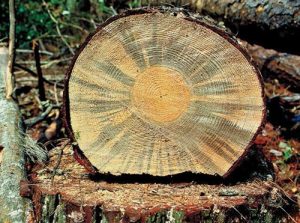
Damage from southern pine beetle is evident in blue-gray stain caused by the fungus carried and transmitted by the beetle.Photo courtesy of Ronald F. Billings, Texas Forest Service; Bugwood.org
“Hard” pines, such as non-native red, scotch and Austrian, are most at risk in the state, but the native tree of most concern is pitch pine. Once abundant, its numbers have diminished due to development of its preferred habitat, and only scattered patches of pitch pine remain.
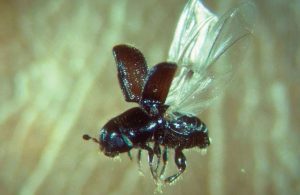
Adult southern pine beetles are about 2 to 4 mm long, and are dark brown to black with prominent, broad heads. They commit mass attacks, depleting the tree’s protective resin production. Females create long, winding, S-shaped galleries within which they lay up to 30 eggs. Yellowish white beetle larvae are about 2 to 7 mm in length. As the larvae develop, they tunnel toward the outer bark. Young adults then bore an exit tunnel directly through the outer bark, creating an open shot hole.

Galleries formed by the female southern pine beetle are filled with frass; eggs are laid in the galleries.Photo courtesy of Roger Anderson, Duke University; Bugwood.org
Southern pine beetle is considered the most destructive insect pest of pine in the southern U.S., but has been moving steadily northward. Its presence has been confirmed in the Pine Barrens of New Jersey, where it has caused significant damage; a large infestation was detected in the Pitch Pine Reserve in eastern Long Island, New York, last fall.
Cover Photo courtesy of Erich G. Vallery, USDA Forest Service – SRS-4552; Bugwood.org
The post SOUTHERN PINE BEETLE MOVES NORTH appeared first on AmeriNursery.com.
]]>The post HEAT-TOLERANT HYBRID ALYSSUM NAMED TEXAS SUPERSTAR appeared first on AmeriNursery.com.
]]>Lobularia White Stream, a hybrid alyssum, has been selected as one of the 2015 Texas Superstar plants.
“White Stream is a new type of alyssum that will survive the heat of Texas summers,” said Dr. Brent Pemberton, Texas A&M AgriLife Research ornamental horticulturist and head of the Texas Superstar board, Overton.
Alyssum has traditionally been a cool-season plant, Pemberton said.
“It’s been happy in summers up north where it’s cool. Here, we grow it in the fall, as a winter plant and it will usually survive the winter in a protected location,” he said. “But White Stream is just a whole new thing. In fact, it won’t tolerate freezing temperatures at all. It gives gardeners in Texas the opportunity to have that kind of plant in the summer landscape.”
Lobularia White Stream was developed by Danziger, an international floriculture company. White Stream is a spreading annual that makes a mat; it’s used as ground cover in landscapes and produces fragrant flowers all summer, Pemberton said. It can also be grown in large pots as a patio plant.
All Texas Superstar plants undergo extensive tests throughout the state by AgriLife Research and Texas A&M AgriLife Extension Service horticulturists, Pemberton said. He’s personally tested White Stream at the East Texas Horticultural Field Day trials at the Texas A&M AgriLife Research and Extension Center at Overton for the last three years, along with other alyssum varieties.
To be designated a Texas Superstar, a plant must not just be beautiful but also perform well for consumers and growers throughout Texas. Superstars must also be easy to propagate, which should ensure the plants are not only widely available throughout Texas but reasonably priced, as well, he said.
Pemberton noted that Danziger has other hybrid alyssums in the series: Lavender Stream, Silver Stream, Summer Stream, White Stream, Purple Stream and Bicolor Lavender. White Stream was chosen among the others because it proved to be the most heat tolerant.
All the hybrid alyssums are full-sun plants, he said. Though the cool-season alyssums are grown from seed, the heat-tolerant series is vegetatively propagated, and no seed is available at wholesalers or retailers, only rooted cuttings.
“You should be able to buy it in six packs or 4-inch pots – it’s probably going to be more available in 4-inch or larger pots,” Pemberton said.
In the landscape, plants should be planted in about 1-foot spacings after the last freeze, he said. Fertility needs are the same as any other bedding plant. With good growing conditions, Lobularia White Stream should spread to fill in the spacing and create a good mat in about three to four weeks. Water use is moderate. They have limited tolerance to drought, but tolerate reflected heat well.
The post HEAT-TOLERANT HYBRID ALYSSUM NAMED TEXAS SUPERSTAR appeared first on AmeriNursery.com.
]]>